
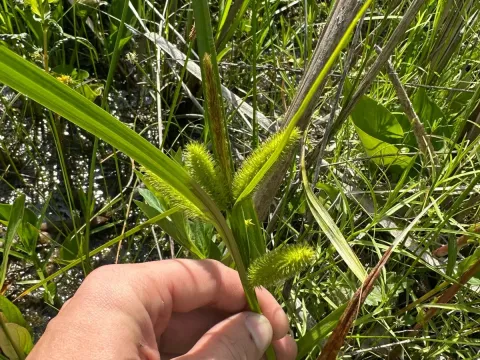
Bristly sedge
Carex comosa
Carex comosa, commonly known as bristly sedge, is a perennial herbaceous plant belonging to the Cyperaceae family. It is native to North America, where it typically inhabits wetlands, marshes, and riverbanks.
What the section contains
Bristly sedge
The primary requirement for this crop is a high level of soil moisture. It thrives in conditions ranging from permanently saturated soil to shallow water depths, making it an excellent candidate for water garden design.
Regarding light, bristly sedge prefers full sun, which promotes dense growth and the development of its characteristic inflorescences. While it can tolerate partial shade, insufficient light often results in a sparser, weaker plant structure.
The plant adapts well to various soil compositions, including organic-rich silts and nutrient-dense clay soils. Its root system plays an important role in soil stabilization, which is often utilized in environmental restoration projects.
In terms of climate, Carex comosa requires consistent moisture throughout the growing season. While it is hardy in many zones, it performs best in regions where summer humidity levels prevent the soil from drying out rapidly.
Carex comosa is generally resistant to many common pests, though fungal diseases can occur under conditions of poor ventilation or stagnation. Proper site selection is the best preventative measure against these threats.
Insects such as leaf-eating beetles may occasionally target the foliage. While these infestations are rarely fatal, they can significantly reduce the ornamental value of the plant if left unchecked during the peak growth season.
Sanitation is a critical component of pest management for this sedge. Removing dead foliage at the end of the season prevents the accumulation of overwintering pathogens and limits the habitat available for harmful insects.
If chemical interventions are necessary, extreme caution must be exercised due to the plant's proximity to aquatic environments. Biological controls are generally preferred to protect the local ecosystem and water quality.
Monitoring the growth density is essential for maintaining plant health. If the sedge is allowed to grow too thick, the inner parts of the cluster may suffer from a lack of airflow, increasing susceptibility to various rots.