
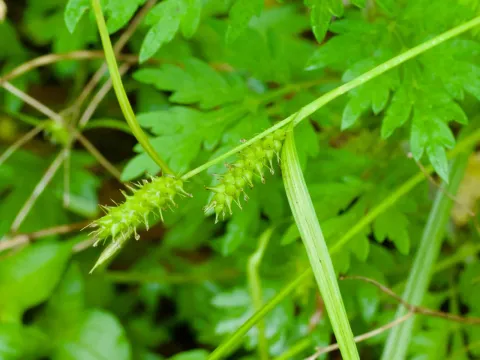
Brown's Sedge
Carex brownii
Brown's Sedge, scientifically known as Carex brownii, is a perennial herbaceous plant belonging to the Cyperaceae family. It is recognized for its elegant, clump-forming habit and is native to regions with moist climates, particularly in the Southern Hemisphere.
What the section contains
Brown's Sedge
This species thrives in high-moisture environments, making it an excellent candidate for bog gardens or the margins of natural ponds. It requires consistently moist, well-draining soil rich in organic matter to reach its full size and potential.
Regarding light conditions, the plant performs best in partial shade, where it is protected from the scorching intensity of midday sun. However, it can tolerate full sun if provided with adequate and continuous moisture levels in the root zone.
Botanically, Brown's Sedge is characterized by its narrow, arching leaves and distinct, bottle-shaped perigynia which are typical for the Carex genus. These features contribute to its textured appearance, making it highly desirable for landscaping.
Agricultural and horticultural use is primarily focused on aesthetic landscaping and erosion control. Due to its dense root system, it is an effective plant for stabilizing wet soil on slopes or near aquatic features.
The primary threats to the health of Brown's Sedge involve fungal pathogens that flourish in stagnant, humid conditions. Lack of air circulation around the crown of the plant can lead to crown rot and other soil-borne diseases.
Common pests include slugs and snails, which can significantly damage the foliage during damp weather. Implementing simple physical barriers or using organic bait can help manage these populations without chemicals.
Another issue is leaf spot disease, which may appear as irregular brown patches on the foliage. Proper spacing during initial planting is the most effective preventative measure to ensure adequate airflow and reduce pathogen spread.
Over-fertilization should be avoided, as it leads to excessive, succulent growth that is more susceptible to both pest attacks and winter damage. A light application of balanced organic fertilizer in early spring is usually sufficient.
Maintaining cleanliness in the planting area by removing dead leaves and debris helps eliminate overwintering sites for insects and prevents the buildup of fungal spores near the root zone.