
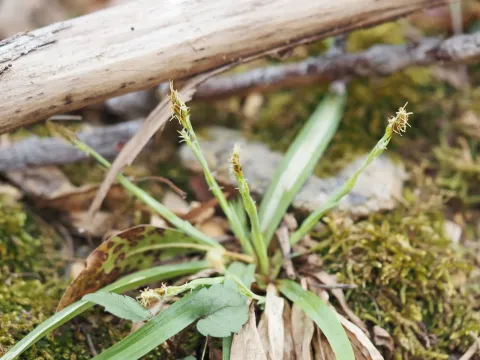
Broad-leaved sedge
Carex platyphylla
Carex platyphylla, commonly known as Broad-leaved sedge, is a perennial plant belonging to the Cyperaceae family. It is native to the deciduous woodlands of North America, where it thrives in shaded and moist environments.
What the section contains
Broad-leaved sedge
The plant is highly valued by horticulturists for its distinctively broad, metallic-blue to green foliage. Unlike many other sedges that have grass-like narrow blades, this species forms elegant, low-growing rosettes that add texture to any garden bed.
Broad-leaved sedge thrives in rich, well-draining soils with a neutral to slightly acidic pH. It performs best in woodland conditions, requiring partial to full shade to maintain its vibrant leaf color and overall plant vigor throughout the season.
Regarding moisture, the plant appreciates consistent watering, especially during its establishment phase. While it is relatively drought-tolerant once mature, it should never be left to dry out completely in harsh, sunny conditions.
Maintenance is straightforward and involves minimal intervention. A key part of the annual care cycle is trimming back the old foliage in early spring to encourage fresh, healthy growth, ensuring the plant maintains its attractive appearance year-round.
Carex platyphylla is generally resistant to most pests and diseases, making it a reliable choice for low-maintenance landscapes. However, improper site selection, particularly poor soil drainage, can lead to root rot issues.
During extended periods of hot, dry weather, spider mites may become a localized concern. They feed on the sap, causing the foliage to lose its characteristic luster and eventually turn yellow if not treated promptly.
To prevent fungal issues, gardeners should ensure adequate spacing between plants to facilitate airflow. Good sanitation practices, such as removing fallen debris, are essential for keeping the planting area free from potential pathogens.
While chemical interventions are rarely needed, application of organic fungicides can be considered if conditions remain exceptionally humid for prolonged periods. Prevention through site optimization is always the most effective strategy.
Overall, Broad-leaved sedge represents a robust and aesthetically pleasing plant that requires very little specialized care. Its natural resistance makes it an excellent option for sustainable and environmentally friendly garden designs.