
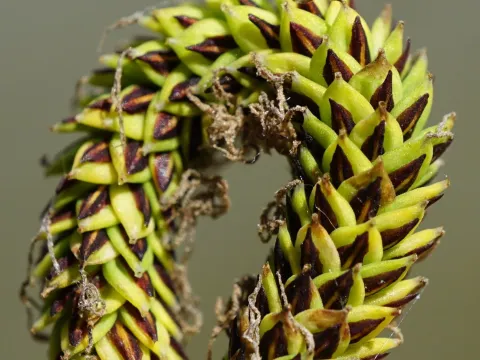
Buek's sedge
Carex buekii
Buek's sedge (Carex buekii) is a rhizomatous perennial belonging to the Cyperaceae family. It is recognized for its robust growth habit and its ability to form extensive root mats, which are highly effective in soil stabilization along riverbanks.
What the section contains
Buek's sedge
The plant originates from Central and Southeast Europe. Its typical habitats include floodplains, wet meadows, and various riparian zones where the water table is consistently high throughout the growing season.
Cultivation requires specific soil conditions, favoring heavy-textured soils such as loams and clays. Adequate moisture retention is critical, as this species lacks the physiological adaptations to withstand prolonged dry spells or moisture deficiency.
Climatic adaptability of this species is notable, particularly regarding its frost resistance. It is well-suited for temperate regions, where it experiences a clear dormancy period followed by vigorous spring regrowth from its perennial rhizomes.
In practice, Buek's sedge is utilized for ecological restoration projects and bioengineering. Its use as a filter for wastewater and a stabilizer for embankments makes it a functional component in modern landscape management and land reclamation.
The primary threats include fungal diseases such as leaf rust, which can cause significant foliar damage under conditions of high humidity and poor ventilation. Proper site selection and spacing are essential for prevention.
Pests that occasionally affect the plant include sap-sucking insects and specialized leaf-miners. Integrated pest management, focusing on sanitation and maintaining plant vigor, is the most effective approach to minimize damage.