
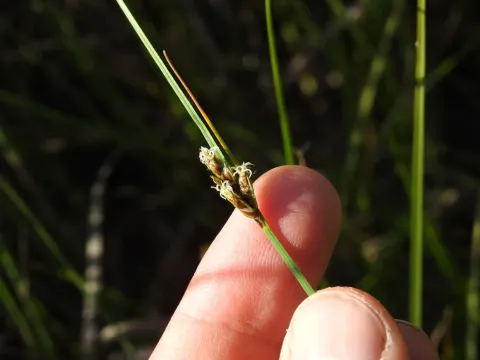
Divised sedge
Carex divisa
Carex divisa, commonly known as divised sedge, is a perennial plant belonging to the Cyperaceae family. It is widely distributed across Europe and the Mediterranean basin in various wetland habitats.
What the section contains
Divised sedge
The plant thrives in moist, often saline, or brackish soils. This high tolerance to salinity distinguishes it from many other grass-like species, making it valuable for restoration projects in saline environments.
Divised sedge requires significant soil moisture throughout the growing season. It performs best in heavy, water-retentive soils where water tables are high, ensuring stability for its rhizomatous root system.
From an agronomic perspective, the plant acts as a vital soil binder. Its extensive underground rhizomes create a durable sod layer, which is essential for preventing soil erosion in coastal and marshy areas.
In terms of management, it is primarily managed through extensive grazing practices rather than intensive cropping systems. The biomass produced serves as forage in areas where other productive grasses cannot survive.
The most significant threats to divised sedge include fungal pathogens, particularly those causing leaf spot or rust, especially in damp and poorly ventilated field conditions.
Root pests and soil-borne larvae can occasionally damage the rhizome network, though the plant is generally robust enough to withstand minor infestations.
Environmental factors like extreme drainage or complete drying of the habitat represent the greatest threat to its long-term survival in an agricultural context.
Invasive weed species can pose a risk if the habitat is overgrazed, as this reduces the density of the sedge mat and allows light to reach competing unwanted vegetation.
Effective management requires monitoring for signs of rot during excessive rainy seasons, ensuring that drainage is maintained to prevent anaerobic conditions in the root zone.