
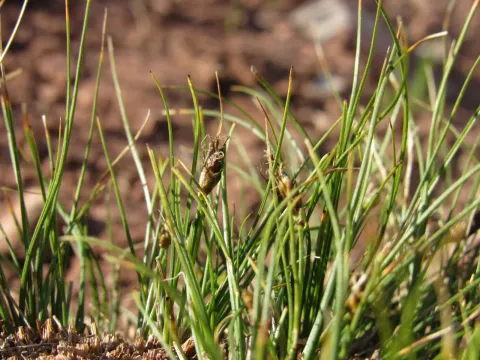
Spikenard sedge
Carex nardina
Spikenard sedge (Carex nardina) is a perennial member of the Cyperaceae family, widely recognized for its alpine and arctic distribution. It is characterized by its compact, tufted growth habit, which allows the plant to thrive in harsh, wind-exposed environments.
What the section contains
Spikenard sedge
The native habitat of this species includes rocky slopes, gravelly barrens, and tundra landscapes throughout the Northern Hemisphere. This evolutionary history makes it an ideal candidate for rock gardens and xeriscaping projects in cold climates.
Regarding soil requirements, Carex nardina demands excellent drainage. It does not tolerate waterlogged conditions, making it essential to provide a substrate composed of sand, grit, or small stone chips to ensure the health of its root system.
Climatic adaptability is a hallmark of this sedge. It is highly resistant to freezing temperatures and performs best in open, sunny locations where it can receive the full spectrum of sunlight throughout the growing season.
In terms of cultivation, the plant requires very little maintenance once established. It is well-adapted to nutrient-poor soils and does not require frequent fertilization, as excessive nutrient levels can sometimes hinder its natural, compact growth form.
The primary threats to Spikenard sedge in a managed environment are related to poor drainage and fungal infections. Constant soil moisture around the root collar can lead to decay, which is often fatal to the plant.
Although pests are generally not a significant problem for Carex nardina, certain generalist insects may cause localized damage to the foliage. Monitoring and early detection are usually sufficient to prevent any widespread issues.
Environmental stress, particularly fluctuating temperature cycles without protective snow cover, can cause winter dieback. Providing a light layer of mulch or ensuring the plants are well-hydrated before winter can mitigate these risks.
Weed competition can be a major challenge for this slow-growing sedge. It is important to keep the immediate area clear of invasive grasses or perennials that might compete for resources and restrict the airflow around the plant base.
To ensure long-term vitality, avoid the use of harsh herbicides near the plants, as Carex species can be sensitive to certain chemical compounds. Mechanical weeding remains the safest method for maintaining the health of the planting area.