
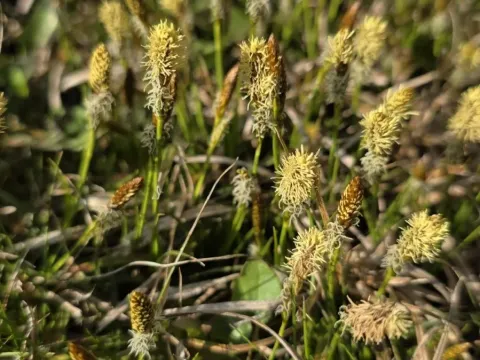
Spring sedge
Carex caryophyllea
Spring sedge (Carex caryophyllea) is a member of the Cyperaceae family. It is a perennial herbaceous plant, primarily known for its role in natural grasslands and as a component of semi-natural pastures and meadows.
What the section contains
Spring sedge
The plant features slender, creeping rhizomes, which allow it to form dense, resilient turf. The stems usually reach heights between 10 and 30 cm and are characterized by distinctive reddish-brown leaf sheaths at the base.
This species thrives in moderately moist soil conditions but displays remarkable tolerance to various environmental stresses. It adapts well to different soil types, including sandy and loamy substrates, exhibiting high ecological flexibility across its range.
From an agricultural perspective, the plant is valued for its early spring growth cycle, making it an essential part of early seasonal grazing. It prefers sunny locations but is quite capable of surviving in partially shaded areas within meadow ecosystems.
In practice, the plant is used for soil stabilization due to its dense root system. It is particularly useful for preventing erosion on slopes and maintaining the structure of pasture land, contributing to sustainable landscape management.
Spring sedge can be susceptible to fungal infections such as leaf rust (Puccinia species), which typically occur under conditions of high humidity. These infections can reduce the biomass productivity of the sward.
Insects like aphids and certain species of grass flies may occasionally target the leaves or reproductive structures. However, these infestations are usually limited in scale and rarely reach levels that require chemical intervention.
Competition from more aggressive, taller grass species often restricts the density of sedge populations in managed agricultural settings. Overgrazing can also lead to the degradation of the plant's natural habitat.
Waterlogging remains a significant physiological threat to the species, as it can lead to root rot and decrease the vigor of the plant cluster. Poorly drained soils are generally unsuitable for maintaining healthy sedge stands.
Integrated management practices, including proper grazing regimes and seasonal mowing, are the most effective ways to maintain the health of the plant. Ensuring adequate drainage and soil aeration helps to mitigate the risk of pathogen outbreaks.