
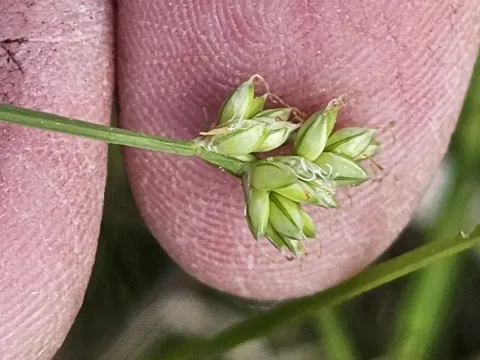
Carex tenuiflora
Carex tenuiflora
Carex tenuiflora, commonly known as the thin-flower sedge, is a perennial herb belonging to the Cyperaceae family. It is a highly specialized plant adapted to northern boreal climates and cold wetland habitats across the Northern Hemisphere.
What the section contains
Carex tenuiflora
The species is typically found in habitats such as sphagnum bogs, fens, and margins of lakes. It thrives in soils that remain waterlogged for most of the growing season, showing exceptional tolerance for anaerobic soil conditions.
Botanically, this sedge is characterized by its slender stems and thin, narrow leaves. It spreads through short rhizomes, forming loose clumps that provide cover for various organisms in marshy landscapes.
The cultivation requirements are specific: the soil must be acidic and rich in organic matter. Unlike conventional crops, it does not require supplemental irrigation but rather a stable water table to maintain its physiological processes.
In terms of agricultural significance, this species serves primarily as a component of wild forage in northern pastures. It is valued for its ability to prevent soil erosion in wet areas where other agricultural crops cannot establish a root system.
The primary threat to Carex tenuiflora populations is the modification of wetland hydrology. Drainage projects aimed at converting marshlands into arable fields lead to the rapid decline of this species as it is strictly hydro-dependent.
Agricultural runoff containing high concentrations of nitrogen and phosphorus can alter the nutrient balance of its habitat, leading to competitive exclusion by more aggressive plant species that thrive in eutrophic conditions.
Pathogenic threats include various fungal leaf spots and rusts that may emerge during humid, stagnant conditions. While these diseases are rarely fatal to the whole population, they can reduce the overall nutritional value of the biomass.
Insect pests are generally host-specific. Certain lepidopteran larvae may feed on the foliage, although they typically do not reach densities that would require chemical intervention in a balanced ecosystem.
Conservation and sustainable management of these meadows require the exclusion of heavy machinery and the prevention of intensive land use that could disrupt the fragile peat-forming process essential for the sedge's growth.