
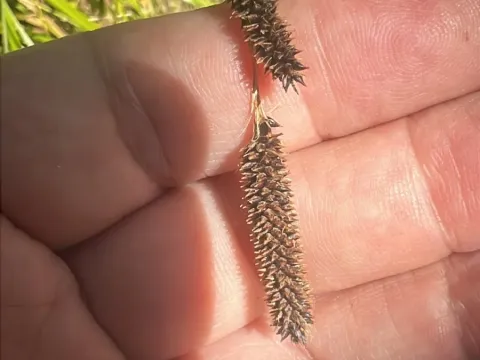
Carex solandri
Carex solandri
Carex solandri is a perennial herbaceous plant belonging to the Cyperaceae family. Originating from New Zealand, it has established itself as a popular ornamental species in various climates due to its elegant growth habit and year-round interest.
What the section contains
Carex solandri
The plant is characterized by its tufted appearance, with long, slender leaves that arch gracefully. These leaves originate from a central crown, creating a dense mound that is highly effective for ground cover or as a focal point in landscapes.
In terms of cultivation, it requires well-drained but moist soils. While it can tolerate a variety of soil types, it performs best in rich, humus-based substrates with a slightly acidic to neutral pH level, mirroring its native forest habitat.
Temperature and light requirements are critical for optimal growth. Carex solandri prefers partial shade, which prevents the leaf tips from browning during hot summer months. It is not overly cold-hardy, so in cooler regions, it may require winter protection.
Its primary agricultural and horticultural utility lies in landscape design and soil stabilization. Because of its root structure, it is often employed to prevent erosion on gentle slopes, combining functional utility with aesthetic value.
The most common pests affecting Carex solandri include aphids and occasionally spider mites. These sap-sucking insects can cause leaf yellowing and structural weakness if populations are not managed early in the growing season.
Fungal pathogens, particularly those causing leaf spot, are prevalent in environments with high humidity and poor air circulation. Overcrowding plants significantly increases the risk of these infections spreading rapidly.
Root rot is a major threat linked to poor soil drainage. When the roots are saturated for extended periods, the plant becomes susceptible to oomycetes and other soil-borne pathogens that compromise the vascular system.
Preventative measures include avoiding overhead watering, which keeps the foliage moist for too long. Instead, drip irrigation at the base of the plant is recommended to maintain soil moisture without wetting the leaves.
Effective management also involves the timely removal of dead or decaying foliage, which serves as a breeding ground for pests and pathogens. Proper sanitation ensures that the plant remains healthy and resistant to external stressors.