
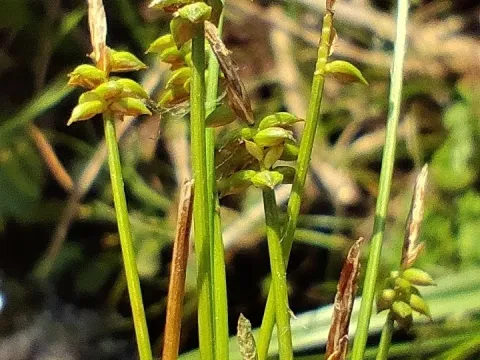
Carex rara
Carex rara
Carex rara, commonly known as a rare sedge, is a perennial herbaceous species within the Cyperaceae family. In an agricultural context, it is recognized for its specialized role in wetland restoration and the maintenance of high-moisture ecosystems.
What the section contains
Carex rara
The plant is native to East Asia, thriving in regions with high precipitation and water-logged substrates. Its evolutionary history has endowed it with the ability to survive in nutrient-poor, acidic conditions that are generally unsuitable for traditional crop cultivation.
Morphologically, the species forms loose tufts with slender, grass-like foliage that is characteristic of the genus. Its root system is well-adapted for stability in soft, saturated soils, allowing the plant to persist in harsh aquatic environments throughout the year.
Agronomic requirements for Carex rara center on strict moisture control. The soil must remain permanently saturated; therefore, site selection is usually limited to swampy meadows, margins of ponds, or artificial biofiltration zones where water levels are strictly managed.
Soil acidity is a critical factor, as this sedge prefers acidic environments to optimize nutrient uptake. While the species is resilient to low temperatures, it requires protection from extreme desiccation during the growing season to ensure optimal vegetative spread.
The primary economic use of Carex rara lies in its capacity for phytoremediation. The plant is increasingly utilized in agricultural projects designed to remove pollutants from irrigation runoff and to manage water quality in sensitive landscapes.
Harvesting strategies involve cutting the aerial foliage during the late autumn period once the plants have completed their growth cycle. This practice helps to remove accumulated nutrients from the ecosystem and prevents organic matter buildup in water filtration systems.