
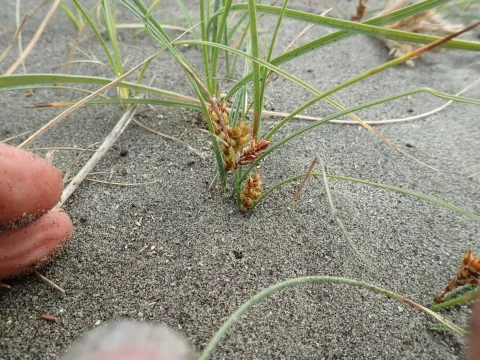
Carex pumila
Carex pumila
Carex pumila, commonly known as the dwarf sedge, is a perennial plant belonging to the Cyperaceae family. In agricultural and landscape settings, the sowing period is typically scheduled for early spring, once soil temperatures reach 8–10°C to facilitate uniform germination.
What the section contains
Carex pumila
Seed treatment, including cold stratification, is highly recommended to overcome dormancy and improve emergence rates. Seeds should be sown at a shallow depth of approximately 1–2 centimeters, ensuring they remain in contact with moist soil without being buried too deep.
For more predictable results in commercial cultivation, vegetative propagation by division of the rhizomes is preferred. This process is best performed during the plant's dormancy period or early in the growing season, allowing the plants to establish roots before summer heat.
Planting density depends on the desired ground cover; typically, 6 to 10 plants per square meter are utilized for successful establishment. This spacing allows the rhizomatous system to fill the gaps effectively within the first two growing seasons.
Maintaining clean rows during the initial growth phase is essential for commercial sedge production. Mechanical cultivation or manual weeding between rows ensures that the young plants are not overwhelmed by faster-growing competitive vegetation.
Carex pumila excels in light, sandy, and well-draining soils. It is notably resilient to coastal conditions, demonstrating excellent tolerance to salinity and wind exposure, which makes it an ideal candidate for soil stabilization and sand dune restoration projects.
This species requires full sun exposure to maintain its compact growth form and health. In shady environments, the foliage tends to lose its characteristic density, and the plant becomes more susceptible to environmental stressors and fungal pathogens.
Moderate moisture is key to the successful growth of this sedge. While it displays some drought resistance once established, consistent soil moisture during the first year of growth is vital for developing a robust root system capable of long-term survival.
The plant adapts to a wide range of soil pH levels, typically thriving between 5.5 and 7.5. It is extremely hardy and capable of surviving cold winter temperatures, provided that the soil is not overly saturated or prone to standing water during freezing conditions.
Standard fertilization practices, particularly with balanced NPK fertilizers applied during the active spring growth phase, can significantly enhance biomass production. Avoiding over-fertilization is crucial, as excess nitrogen can lead to succulent growth that is prone to lodging.
Fungal diseases such as rust and leaf spot are common threats to sedge populations, particularly in high-humidity climates. Proper site management, including adequate spacing to ensure airflow, is the most effective cultural method to prevent these infections.
Insect pests, including aphids and thrips, may occasionally infest the foliage, especially under stress conditions. Regular monitoring is advised, and intervention with systemic insecticides should be considered only when pest populations exceed acceptable thresholds.
Root-knot nematodes can become a chronic issue in fields where sedges have been grown continuously. Incorporating diverse crop rotation strategies and using certified, pathogen-free nursery stock are the primary defenses against these soil-borne threats.
Weed management remains the most significant challenge for newly established plots. Mulching with organic material provides a dual benefit of suppressing weed competition while retaining essential soil moisture for the developing rhizomes.
In cases of severe damage or diseased foliage, timely pruning or removal of affected areas helps to prevent the spread of pathogens throughout the planting. Maintaining high standards of field hygiene is essential for the long-term viability of the crop.