
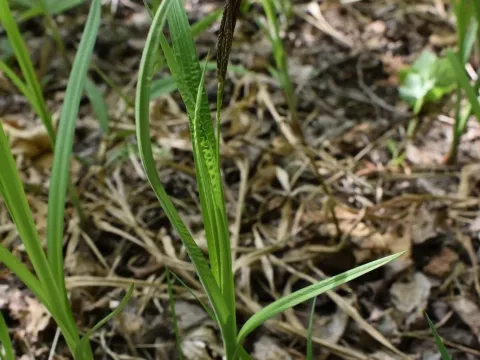
Carex sordida
Carex sordida
Carex sordida is a perennial herbaceous plant belonging to the Cyperaceae family. In its natural habitat, it propagates primarily through seeds and vegetative growth via a robust system of rhizomes that spread underground.
What the section contains
Carex sordida
In agricultural practice, sowing is typically scheduled for early spring when soil temperatures reach 5-8 degrees Celsius. Providing consistent soil moisture is essential for successful germination, as the seeds are highly sensitive to drought during the establishment phase.
For vegetative propagation, rhizome segments are planted into moist, prepared soil. The optimal planting depth is between 3 and 5 centimeters, which ensures proper contact with the soil and encourages rapid root formation and the development of new leaf rosettes.
To establish uniform stands, it is recommended to sow the seeds in rows with spacing of 30-45 centimeters. This arrangement provides adequate space for individual plant growth and significantly simplifies maintenance tasks such as weed control.
During the first year of growth, it is crucial to perform mechanical weeding in the inter-row spaces to prevent competition from weeds, which can easily suppress young sedge plants before they establish a deep root system.
This species has moderate environmental requirements, preferring moist and well-drained habitats. It thrives in floodplain meadows, riverbanks, and areas near wetlands where the soil is rich in organic matter and nutrients.
Carex sordida is highly winter-hardy and capable of tolerating temporary waterlogging, making it suitable for regions with cool and temperate climates. It can survive spring flooding without suffering long-term damage to its physiological functions.
The ideal soil conditions are neutral to slightly acidic. Soils with high salinity or excessive alkalinity should be avoided, as these conditions inhibit the development of the rhizome system and significantly reduce overall biomass production.
The plant is light-loving and performs best in open, sunny locations. Shaded environments beneath tree canopies generally lead to reduced productivity and delayed development, including issues with flowering and seed maturation.
While the plant is adapted to humid conditions, additional irrigation may be required during prolonged summer droughts. Maintaining adequate moisture is key to ensuring continuous growth and preventing the premature yellowing of foliage.
The primary agricultural use of Carex sordida involves the harvesting of green biomass for forage purposes. Although the leaves have a tough structure, the young growth provides a decent source of fiber and crude protein when harvested at the right time.
Yield capacity is strongly influenced by soil fertility and water management. With appropriate fertilization and timely moisture supply, the crop can provide consistent harvests for several consecutive years from the same plot.
Beyond its feed value, the plant is highly valued for its role in soil erosion control. Its dense, fibrous root system binds soil particles effectively, making it an excellent choice for stabilizing slopes and embankments against erosion.
Productivity can be enhanced by applying moderate nitrogen-based fertilizers during the active growth phase. This stimulates the production of new leaves and helps increase the overall volume of harvested plant material.
Proper harvest management involves allowing the plants time to recover between cuttings. Over-exploitation without adequate rest periods can weaken the root system and lead to a significant decline in stand density over time.
Carex sordida is generally resistant to most common crop diseases, though high-humidity environments can sometimes encourage the development of fungal infections. Rust fungi, which appear as reddish pustules on leaves, are the most frequent concern.
To prevent disease outbreaks, growers should maintain recommended planting densities to ensure good airflow throughout the canopy. Improved aeration helps lower the humidity around the base of the plant, discouraging fungal growth.
Pests, such as soil-dwelling larvae or insects targeting generative organs, may occasionally cause damage. Agronomic measures, such as deep tillage before planting, are effective in controlling these threats by disrupting their life cycles.
Powdery mildew can occur during periods of high humidity combined with fluctuating temperatures. Monitoring the health of the plants and removing infected parts promptly can help prevent the spread of the pathogen to neighboring clusters.
In cases of severe infection, it is recommended to harvest the biomass and remove it from the site entirely. This prevents the accumulation of fungal spores in the soil and reduces the risk of recurrence in the following season.
Harvesting for forage is ideally conducted at the beginning of the heading stage, while the tissues remain soft and nutrient-dense. Cutting at this time ensures the best quality of biomass for livestock feed purposes.
For seed collection, growers should wait until the spikes turn brownish but harvest before widespread shattering occurs. Precise timing is required to maximize seed recovery and ensure high-quality planting material for the next cycle.
The use of mechanized mowers allows for efficient and clean harvesting. The cutting height should be set to at least 5-7 centimeters to protect the tiller nodes and ensure that the plants have the energy reserves needed to regenerate quickly.
Once harvested, the material should be processed immediately to prevent heating and spoilage. If being dried into hay, it should be spread on clean, dry surfaces in a well-ventilated area protected from rain.
Crop residues remaining after harvest can be incorporated into the soil as organic matter. However, if disease symptoms were present during the season, it is better to remove residues from the field to maintain a sanitary environment.