
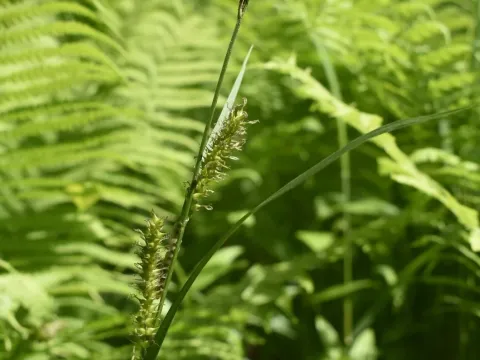
Dry-loving sedge
Carex drymophila
Dry-loving sedge is a perennial rhizomatous plant belonging to the Cyperaceae family. The natural growth cycle of the crop involves vegetation regrowth in early spring, immediately after the snow melts.
What the section contains
Dry-loving sedge
Optimal timing for natural regeneration and propagation by seeds occurs between late April and May. In industrial cultivation, seeds are sown in prepared, moistened soil once the topsoil warms up to 8–10 degrees Celsius.
Pre-stratification is recommended to accelerate seed germination in production areas. Sowing is carried out in rows or wide-row patterns, depending on the intended use of the sward.
The sowing depth is a crucial factor, not exceeding 1–2 centimeters. Deeper sowing significantly reduces germination energy due to the biological characteristics of the small sedge seeds.
Once seedlings emerge, weed control is required during the first year of growth. The intense development of the root system subsequently allows the crop to successfully compete with other grass species.
The crop has high requirements for substrate moisture. In its natural environment, it prefers moist floodplain meadows, lowland marshes, and damp forest areas, which determines the selection of sites for introduction.
Dry-loving sedge is adapted to various soil types, including loams and organic-rich peatlands. The optimal pH range for active growth is slightly acidic to neutral.
The plant possesses high frost resistance typical of species growing in northern latitudes and temperate climates. It is capable of withstanding prolonged flooding in the spring, making it a valuable component for flood meadows.
The light regime for this species is characterized by moderate shade tolerance, as indicated by its specific name. Nevertheless, the most productive stands are formed in open areas with sufficient solar radiation.
The application of mineral fertilizers, especially nitrogen components, positively affects biomass. However, excessive fertilization may lead to lodging of the stand if mowing schedules are not followed.
Agricultural use of dry-loving sedge is focused on harvesting green biomass and hay. Crop yield depends heavily on the hydrological regime of the area and soil fertility.
Average green biomass productivity in natural conditions ranges from 15 to 30 centners per hectare. When implementing meadow improvement techniques, this yield can be significantly increased.
Hay quality is considered average, with nutritional value peaking before the flowering phase begins. Delayed mowing leads to coarse stems and reduced protein content.
Use as pasture feed is permissible, although sedge is less palatable to livestock compared to true grasses. To improve taste, intercropping with legumes is often practiced.
The biological potential of the species allows it to be used as a reclamation crop for stabilizing banks and preventing soil erosion in waterlogged areas.
The plant is highly resistant to most pathogens affecting field crops. However, in conditions of excessive humidity and dense stands, foci of leaf fungal infections may occur.
Common pests include click beetle larvae (wireworms) that attack the rhizomes. However, due to vigorous vegetative propagation, damage to the root system rarely leads to the death of the entire plantation.
Aphids may settle on generative shoots during flowering, reducing seed productivity. Prevention consists of maintaining optimal stand density and timely mowing.
Rust may affect the above-ground parts in years with high rainfall. Crop rotation and the removal of plant debris after the end of the season are recommended for control.
Overall, dry-loving sedge is considered a low-maintenance crop that practically requires no pesticide use on an industrial scale.
The hay harvest period begins in the jointing or early heading phase. During this time, the plants contain the maximum concentration of nutrients and vitamins.
Mechanized equipment such as rotary or sickle-bar mowers is used for hay harvesting. The recommended cutting height is 5–7 centimeters to ensure high-quality regrowth of the aftermath.
After mowing, the mass is wilted in windrows until the moisture content reaches 15–18 percent. Frequent turning of the windrows accelerates the drying process and prevents the loss of nutrients.
Seed harvesting is conducted at the stage of waxy maturity when the tips of the shoots begin to turn brown. Delaying the harvest leads to seed shedding due to the brittleness of the spikelets.
Post-harvest processing includes cleaning the seed material using screen separators and mandatory drying in ventilated facilities to prevent self-heating.