
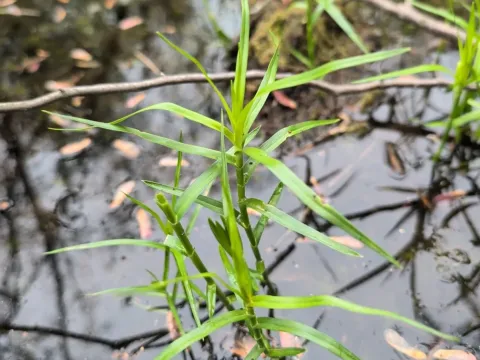
Dulichium
Dulichium
Dulichium (Dulichium arundinaceum) is a perennial herbaceous plant belonging to the Cyperaceae family. It is native to North America, where it typically inhabits wetlands, marshes, stream banks, and the edges of ponds, thriving in nutrient-rich, saturated environments.
What the section contains

Dulichium
The plant is highly regarded for its distinctive bamboo-like appearance, characterized by hollow, jointed stems and leaves arranged in whorls. This unique structural feature makes it an excellent candidate for ornamental landscaping around artificial ponds and natural aquatic habitats.
Regarding soil and water requirements, Dulichium thrives in acidic to neutral soils that remain consistently moist or flooded. It is perfectly adapted for shallow water cultivation, typically performing best at depths ranging from 0 to 15 centimeters above the crown.
Climate adaptability is a significant strength of this species; it prefers temperate conditions with moderate to high sun exposure. While it can tolerate partial shade, full sun promotes denser foliage and more pronounced copper or bronze coloring in the stems during late summer.
Effective agronomic management of Dulichium involves ensuring a stable hydroperiod. Because the plant is a rhizomatous perennial, it can spread rapidly; therefore, in managed landscapes, it is often necessary to plant it in submerged containers to keep its growth contained.
Dulichium is naturally resilient and rarely suffers from severe diseases common to terrestrial agricultural crops. Its primary defense mechanism is its ability to thrive in an environment where many land-based pathogens cannot survive, provided the water remains oxygenated.
Pests are generally not a significant issue for this plant. However, in dense stands or stagnant water conditions, leaf-eating insects or specialized aquatic mites may occasionally appear, though they rarely necessitate the use of chemical pesticides.
Environmental stressors represent the most significant threat to the health of Dulichium. Excessive chemical runoff, high salinity, or heavy metal contamination in the water can lead to chlorosis and stunted growth, negatively impacting the plant's structural integrity.
Root rot can occur if the plant is grown in extremely stagnant, anaerobic water conditions for extended periods. Maintaining water circulation and avoiding excessive organic decay around the root zone is crucial for preventing such issues.
Standard cultural practices to mitigate threats include regular monitoring of water quality and the seasonal removal of dead foliage. This hygiene practice helps prevent the build-up of decomposing organic matter that could otherwise compromise the health of the rhizomes.