
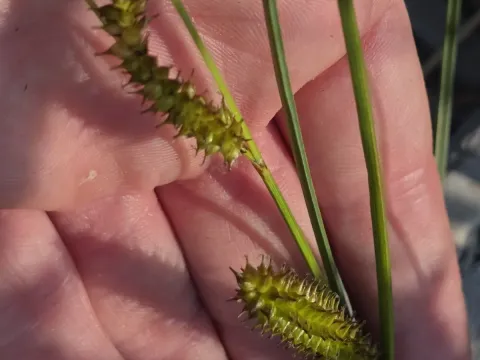
Bottle sedge
Carex rostrata
Bottle sedge (Carex rostrata) is a perennial plant species belonging to the Cyperaceae family. It is widely distributed across the northern temperate and subarctic regions of the world, often found in marshy areas, fens, and shallow waters.
What the section contains
Bottle sedge
The plant thrives in saturated soil conditions, preferring acidic to neutral substrates rich in organic matter. Its extensive rhizomatous root system allows it to spread rapidly, forming large, dense colonies that stabilize the wet environment.
In terms of ecological requirements, it is a hydrophytic species that demands constant soil saturation. It is highly tolerant of anaerobic conditions, making it suitable for waterlogged areas where other standard forage crops fail to survive.
Botanically, it is identified by its characteristic inflated utricles (sacks) surrounding the fruits, which provide buoyancy in aquatic environments. The leaves are typically glaucous, narrow, and tough, containing structural silica that influences its nutritional value.
Agricultural use is primarily centered on sustainable land management of wetlands, as the plant acts as a key species for phytoremediation and water purification in agricultural landscapes, while also providing fiber resources for secondary industries.
Common fungal diseases include various species of smut (Ustilago), which can infect reproductive structures and significantly decrease seed viability during moist growing seasons.
The plant is susceptible to specific leaf-feeding insects, such as sedge-specialist beetles and fly larvae, which may cause necrotic patches and reduce the overall photosynthetic capacity of the plants.