
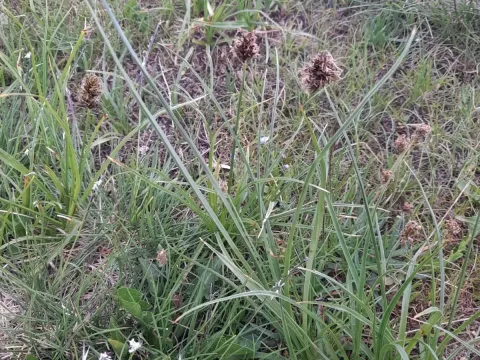
Stinking sedge
Carex foetida
Carex foetida, or stinking sedge, is a perennial plant typically found in harsh high-altitude environments. For cultivation purposes, seeds should be sown in the autumn to allow them to experience natural chilling, which is essential for breaking seed dormancy.
What the section contains
Stinking sedge
Sowing in the spring is often unsuccessful due to the lack of stratification. Therefore, mimicking the natural alpine seasonal cycle is the most effective way to ensure high germination rates for this species.
The seeds must be sown at a very shallow depth, ideally between 0.5 cm and 1 cm. Because the seeds are tiny and lack deep energy reserves, they cannot emerge if buried under heavy soil layers.
A typical sowing density ranges from 5 to 10 grams per square meter. This is sufficient to create a dense, erosion-resistant sward that can thrive in thin alpine soils.
Once conditions are favorable, emergence usually occurs within 3 to 5 weeks. A stable supply of moisture during the initial phase of germination is the most critical factor for success.
As a member of the Cyperaceae family, stinking sedge is perfectly adapted to alpine zones, usually growing at elevations ranging from 2,000 to 4,000 meters. It is highly tolerant of extreme cold.
The plant requires full sun to thrive. It does not compete well in shaded areas and needs open spaces to maintain its health and physiological activity throughout the short growing season.
Soil requirements for this species include stony, rocky, or sandy substrates with neutral to slightly acidic pH levels. It excels in environments where soil nutrients are limited.
Stinking sedge is moisture-loving, particularly during the snowmelt period. However, while it thrives in moist soils, it requires a well-draining substrate to prevent root rot in poorly ventilated areas.
The plant’s ability to survive intense ultraviolet radiation and daily temperature swings makes it a vital species for soil stabilization and environmental restoration in rugged alpine terrain.
Stinking sedge is generally robust against common agricultural pests. However, it can be susceptible to leaf-spotting fungal diseases if environmental conditions remain excessively humid for long periods.
Rodent activity during the winter can be a threat to its root systems, especially in areas with thin soil cover where the plants are more easily accessed by small mammals seeking food.
Competition from faster-growing, more invasive plant species can threaten established patches of Carex foetida if the ecosystem is disturbed by overgrazing or human-induced erosion.
The best defense against threats is maintaining the integrity of the high-altitude ecosystem, ensuring proper soil drainage, and avoiding the use of fertilizers that alter natural soil conditions.
- Avoid excessive soil nitrogen.
- Ensure natural drainage of the site.
- Limit competition from non-native species.