
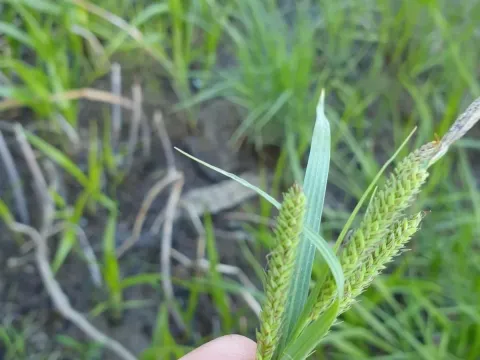
Straight sedge
Carex recta
Straight sedge (Carex recta) is a perennial herbaceous plant belonging to the Cyperaceae family. It is a moisture-loving species that thrives in wetland habitats, wet meadows, and riparian zones where the soil remains consistently damp throughout the year.
What the section contains
Straight sedge
Botanically, it is characterized by its rhizomatous growth habit, which allows it to form dense stands that effectively stabilize wet soils. The plant features narrow, grass-like leaves and specific reproductive structures typical for the genus Carex.
Regarding soil requirements, the species performs best in peat, silt, and poorly drained mineral soils. It possesses a high tolerance for anaerobic conditions, making it an ideal candidate for land reclamation projects in swampy areas or river basins.
The climate requirements for Carex recta are focused on cold to temperate regions. It is extremely hardy and capable of surviving harsh winters with deep freezing temperatures, resuming growth early in the spring as soon as conditions improve.
In terms of agricultural management, maintaining the water table is the most critical factor. Providing sufficient light and preventing excessive competition from woody vegetation are essential for maintaining the productivity of these sedge stands.
The primary health threats to Carex recta include various fungal infections, such as rust and leaf spot diseases, which are exacerbated by high humidity and poor ventilation within the dense plant canopy.
Insect pests such as weevils and certain dipteran larvae can cause damage to the leaf tissue and stems. Such infestations are more prevalent in stands that have become overly stagnant or lack active seasonal management.
Management of these threats involves monitoring the health of the sedge beds and ensuring that the vegetation does not remain too thick for extended periods without cutting or controlled grazing.
Preventive strategies include removing infected plant material and promoting a diverse plant community to naturally limit the spread of specialized pests and diseases that might otherwise devastate a monoculture.
While chemical controls are sometimes considered in high-value reclamation projects, the ecological sensitivity of wetland habitats usually limits the application of synthetic pesticides, favoring cultural control methods instead.