
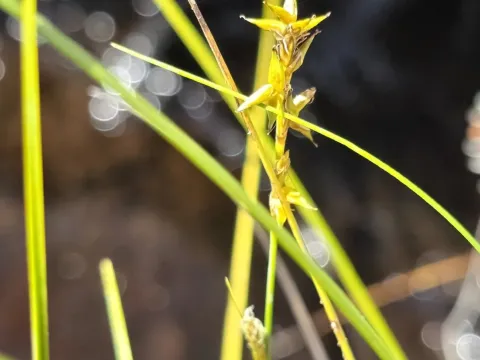
Star sedge
Carex echinata
Star sedge (Carex echinata) is a perennial herb belonging to the Cyperaceae family. It is widely distributed across the Northern Hemisphere, particularly in regions with acidic and moist soil conditions such as bogs, fens, and marshy meadows.
What the section contains
Star sedge
The plant thrives in nutrient-poor and waterlogged environments. Its root system is designed for survival in substrates with low oxygen availability, making it an essential component of peat-forming plant communities.
Botanically, this species is characterized by its distinctively star-shaped spikes, which contain the fruits. The leaves are narrow and bright green, forming dense tufts that help maintain soil structure in fragile wetland habitats.
Climate requirements include a preference for cool temperate zones with significant moisture throughout the growing season. The plant shows high tolerance for acidity and seasonal inundation, although it requires stable hydrological conditions.
While not a primary agricultural crop, the species is valuable in ecological restoration projects for wetland stabilization. Its role in the carbon cycle within peatlands is significant for environmental balance.
Like many wetland sedges, Carex echinata can be susceptible to fungal infections such as smut and rust, which often occur when environmental stress weakens the plant's immune system.
Herbivorous insects, including specialized weevils and larvae of certain moths, are known to feed on the seed heads and foliage, which can limit the spread of the population in small patches.
Habitat loss due to large-scale drainage and conversion of wetlands into arable land represents the most severe threat to the species, leading to fragmentation of its natural range.
Overgrazing in pastures containing significant amounts of star sedge can lead to soil compaction and subsequent replacement of native vegetation by opportunistic or non-native weed species.
Eutrophication of wetlands, caused by agricultural runoff containing nitrogen and phosphorus, can alter the specific soil chemistry required by star sedge, leading to its decline in favor of faster-growing, nutrient-demanding vegetation.