
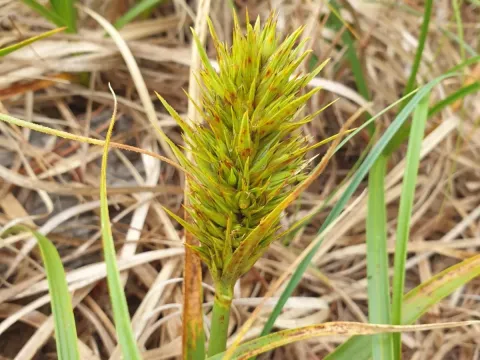
Carex kobomugi
Carex kobomugi
Carex kobomugi, commonly known as Japanese sedge, is a perennial plant belonging to the Cyperaceae family. It is native to the coastal sand dunes of East Asia, primarily found in Japan, Korea, and China, where it serves as a primary colonizer of sandy soils.
What the section contains
Carex kobomugi
The plant is characterized by its robust, creeping rhizomes which form an extensive underground network. This structure allows the sedge to survive in unstable, shifting sands and promotes its lateral growth, helping to stabilize the surface against wind erosion.
Carex kobomugi thrives in well-drained, sandy environments and has a high tolerance for salt spray and low nutrient availability. It prefers areas with direct exposure to sunlight and requires minimal water, as it is adapted to the arid conditions typical of dune ecosystems.
From an agricultural management perspective, the cultivation of this species involves the careful planting of rhizome segments into disturbed sand dunes. Once established, the sedge requires virtually no maintenance, as it is perfectly adapted to withstand harsh weather conditions and poor soil profiles.
Its primary use is in land reclamation and environmental restoration projects. It is an invaluable species for coastal defense, as the dense root mats effectively anchor the sand, preventing erosion and protecting vulnerable hinterlands from maritime encroachment.
In its native habitat, Carex kobomugi is generally resistant to major pests and diseases, demonstrating strong survivability in harsh coastal environments where most other plants fail.
Occasional fungal outbreaks may occur during periods of extreme stagnant moisture or poor air circulation, but these rarely result in significant population declines for established stands of this hardy perennial.