
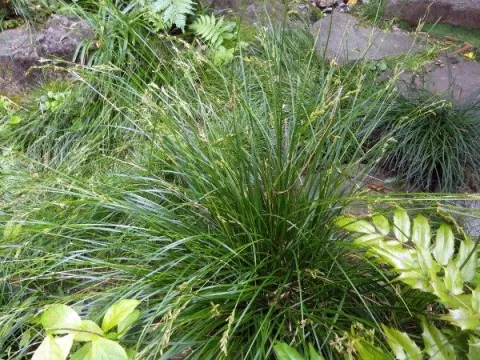
Carex lenta
Carex lenta
Carex lenta is a perennial plant, meaning it establishes itself over multiple seasons rather than requiring annual sowing. The best time for initial seeding is early spring or late autumn when soil moisture is consistent.
What the section contains
Carex lenta
Seeds should be sown onto a prepared seedbed that has been cleared of competing vegetation. Ensuring good soil-to-seed contact is vital, which is achieved through light raking followed by rolling the area.
The sowing depth is critical for this species; it should be planted no deeper than 1 to 1.5 centimeters. Deeper burial often results in poor germination rates due to the small size of the seeds.
In terms of seeding rate, higher densities are required when establishing a monoculture. In mixed grassland scenarios, the proportion should be adjusted to allow for co-existence with companion grass species.
Post-sowing irrigation is beneficial in dry conditions to help the seeds settle and initiate the germination process. Careful management during the first few weeks is essential for stand establishment.
This species, belonging to the Cyperaceae family, thrives in moderately moist to damp soil conditions. It is naturally adapted to areas with fluctuating water tables, such as low-lying meadows.
Carex lenta shows moderate light requirements. While it grows well in open sun, it maintains productivity in partial shade, making it a versatile plant for various landscape and agricultural settings.
The plant is highly resilient to cold temperatures and winter conditions. It survives frost well and begins vegetative growth early in the season as soon as the ground thaws.
Regarding soil, it prefers slightly acidic to neutral pH levels. Fertile, loamy soils provide the best growth results, though it can adapt to diverse soil textures provided moisture is managed.
Adequate soil aeration is important to prevent root-related issues. While it likes moisture, waterlogged soils without movement can lead to oxygen deprivation for the root system.
The biomass yield of Carex lenta is highly dependent on environmental stability. It is known for developing strong, dense root mats that support steady growth over many years.
Estimated hay yields typically range from 1.5 to 2.5 tonnes per hectare under optimal conditions. Fertilization and managed water levels significantly enhance these biomass output numbers.
Nutritional value peaks during the early vegetative stage. As the plant matures towards seed set, the lignin content increases significantly, reducing the digestibility of the forage for livestock.
In multispecies grasslands, this plant contributes structural integrity to the forage mix. It is highly valued for long-term hay production where consistent, stable yields are required.
Proper management of the stand, including avoiding overgrazing, ensures high yield consistency. Maintaining the integrity of the base is key to long-term agricultural productivity.
Fungal pathogens are the primary threat to Carex stands. Rust diseases can manifest on the leaves during periods of high humidity, causing significant defoliation and reducing plant health.
Root rot is a concern in poorly drained soils. Excess stagnant water promotes the growth of pathogens that weaken the root system and reduce the vigor of the entire plant cluster.
Insects that target the stems or developing seed heads can be problematic. Regular inspection is advised to catch any infestation before it leads to large-scale loss in the grassland.
Preventative measures include removing dead plant material after the growing season. This reduces the environment where spores and overwintering pests typically reside during the dormant months.
Maintaining soil pH balance and ensuring proper water drainage are the most effective non-chemical strategies to increase the natural resistance of the plant to common diseases.
Harvesting for forage should occur during the heading stage, before the seeds fully mature. This window ensures the highest quality biomass for livestock consumption.
Mechanical harvesting with rotary mowers is standard. The cutting height should be set at roughly 6–8 centimeters to allow for rapid regrowth of the plants after the harvest.
Hay should be dried thoroughly in the field by windrowing. Proper ventilation is essential to avoid mold development and to ensure the preservation of the forage's nutritional value.
Storage should take place in dry, covered facilities. Protecting the hay from moisture is critical for maintaining its quality over the winter feeding period.
The number of cuts per season is climate-dependent. In regions with long growing seasons, it is often possible to achieve two healthy cuts if the first one is timed effectively.