
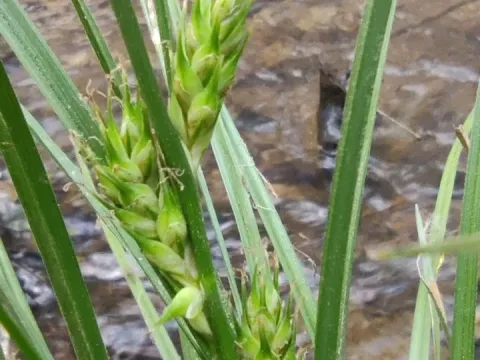
Carex hordeistichos
Carex hordeistichos
Carex hordeistichos, commonly known as barley-row sedge, is a perennial herbaceous plant belonging to the Cyperaceae family. It forms compact tussocks with short rhizomes, enabling it to thrive in specialized wetland environments.
What the section contains
Carex hordeistichos
The plant is typically found in damp, seasonally flooded areas, including saline meadows and river floodplains. Its ability to tolerate periodic waterlogging and moderate salinity levels makes it a resilient species in diverse ecological conditions.
Optimal growth is achieved in sunny locations, although the plant displays a moderate tolerance for shade within a dense sward. It performs best in temperate climates where spring and early summer provide sufficient moisture for vigorous vegetative development.
Regarding soil preferences, it favors clay or loamy soils that possess high water-retention capabilities. A nutrient-rich substrate is essential for the sedge to maintain its biomass production throughout the growing season.
Agricultural management requires careful attention to soil moisture levels. Since the plant is sensitive to prolonged drought, maintaining constant humidity is crucial to prevent desiccation and preserve the integrity of the root system.
In agricultural practice, Carex hordeistichos serves primarily as a component of natural pastures and hay meadows. It contributes to the overall green forage mass, providing essential grazing material during the early vegetative stages.
The nutritional value of the sedge is highest before the flowering phase. As the plant matures and heads form, the concentration of structural fibers increases, which significantly reduces its palatability for livestock.
Yield stability is heavily dependent on the hydrological conditions of the field. In wet years, the crop exhibits higher biomass production, making it a reliable resource for regions where moisture is abundant and other forage crops might struggle.
Beyond its feed value, this species is recognized for its soil-stabilizing properties. Its root structure helps in reclaiming saline or degraded lands, improving soil structure and preventing erosion in vulnerable areas.
Seed production is effective under natural conditions, with wind and water playing key roles in dispersal. For cultivation purposes, timely harvest is necessary to capture seeds before they naturally shed from the spikes.
The primary health threats to Carex hordeistichos include various fungal diseases, particularly rusts, which thrive in humid and poorly ventilated conditions. These infections cause leaf damage and can severely stunt the plant's growth.
Pest pressures primarily stem from insects that target the root base and small rodents that may damage the rhizomes during the dormant season. These threats are particularly detrimental to young, newly established patches.
Weed competition poses a significant challenge, especially in the early stages of growth. Vigorous grasses can quickly outcompete sedge seedlings for light and soil nutrients, necessitating active management of the pasture composition.
Overgrazing presents a major risk to the longevity of a stand. Excessive trampling weakens the tussocks, making them more susceptible to disease and reducing their capacity for regrowth after mowing or grazing.
Disease prevention strategies focus on maintaining proper field sanitation and ensuring adequate air circulation through regular mowing. This reduces the humidity levels that favor pathogen development within the sedge canopy.