
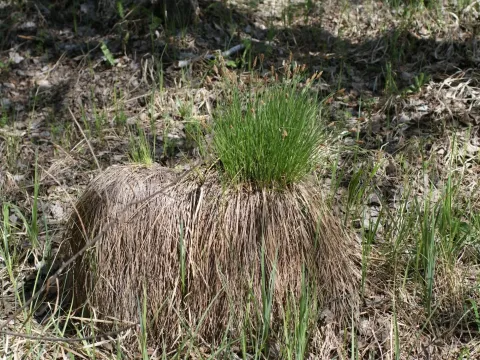
Carex juncella
Carex juncella
Carex juncella, belonging to the Cyperaceae family, is a perennial herbaceous plant known for its dense tussock-forming growth habit. It primarily spreads through both seed dispersal and the gradual expansion of its root system.
What the section contains
Carex juncella
When establishing new stands, seeding is performed in autumn or early spring. Seeds require a period of cold stratification to overcome dormancy and achieve optimal germination rates, mimicking their natural life cycle.
Sowing should be done on the soil surface or with very shallow coverage to ensure that the small seeds maintain contact with moisture. Keeping the substrate consistently damp is vital during the germination phase.
Transplanting seedlings is often preferred for controlled agricultural settings. This method allows for uniform distribution and higher establishment success, especially when reclaiming wetland areas.
Proper spacing is crucial to allow the tussocks to develop fully without excessive competition, though higher density is often used when the primary goal is rapid soil stabilization.
This species is a typical hydrophyte, thriving in environments with high water levels. It is most commonly found in fens, bogs, and along riverbanks where groundwater is permanently present.
The plant prefers acidic to neutral soils with a high content of organic matter. It is highly adapted to peatlands and clay-heavy soils that exhibit poor drainage but high nutrient availability.
Carex juncella shows remarkable frost hardiness, surviving harsh winters and periodic spring flooding. Its root structure is adapted to anaerobic conditions, allowing it to remain dormant yet healthy under water.
While it can tolerate some shade, it exhibits its most vigorous growth in full sunlight. Optimal development depends on the consistency of the water table rather than complex soil chemistry.
Although it does not have high requirements for nitrogen fertilization, the presence of phosphorus and potassium can enhance root health and increase the overall accumulation of biomass.
Agricultural use of this sedge is limited due to the high fiber content of its leaves. It is generally considered a low-quality forage, palatable only in its earliest vegetative stages before blooming.
The primary economic value lies in environmental engineering. The plant is widely used for riparian restoration and protecting embankments from soil erosion due to its deep and dense root network.
Biomass harvested from these stands can be utilized for composting, as mulching material, or as a sustainable fiber source for eco-friendly packaging if processed correctly.
Yields are highly dependent on environmental conditions. In well-maintained, permanently wet environments, the sedge can produce a consistent annual yield of organic matter.
Strategic harvesting is recommended to maintain the health of the tussocks. Avoiding over-harvesting ensures that the plant retains enough energy reserves to survive the winter and resprout in the spring.
Carex juncella is remarkably resistant to most diseases. However, in poorly ventilated or excessively stagnant water conditions, rust diseases can occasionally affect the foliage, reducing overall plant vigor.
Insects targeting the roots are the most common pests. Because these plants grow in saturated environments, they are largely protected from most common terrestrial pests, but aquatic larvae can pose localized threats.
Small mammals, particularly rodents, can cause significant damage by gnawing on the rhizomes during winter months. This can lead to structural instability of the tussocks in the following season.
Viral infections are rare and generally do not impact large-scale populations. The best defense against potential disease is maintaining a healthy, balanced water regime that allows for natural plant immunity.
Competition from aggressive shrubs and invasive wetland weeds can hinder the expansion of sedge stands. Periodic maintenance, such as selective thinning of woody plants, is essential for stand longevity.