
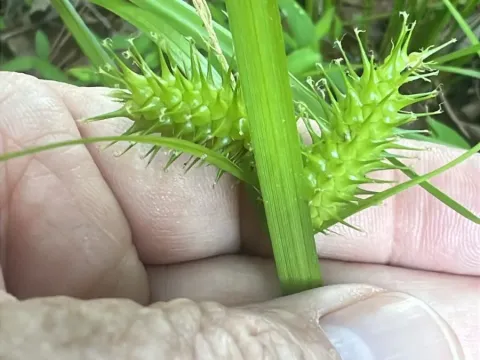
Carex lurida
Carex lurida
Carex lurida, commonly known as the shallow sedge, belongs to the Cyperaceae family. It is a robust perennial grass-like plant that is typically propagated by seeds that require a period of cold stratification to break dormancy.
What the section contains
Carex lurida
When sowing, the seeds should be placed on the soil surface or covered with a very thin layer of substrate. Maintaining high humidity is critical during the initial germination phase to ensure successful establishment.
Greenhouse propagation is often used to produce healthy seedlings, which are then transplanted into open soil once the danger of severe frost has passed and the ground is sufficiently warmed.
The plant exhibits vigorous growth once established and is capable of forming dense clumps through short rhizomes. Proper spacing during initial planting is recommended to allow for this expansion.
For quick coverage, division of mature clumps is often more effective than seeding. This method ensures that new plants retain the genetic characteristics of the parent and begin growing much faster.
This species is highly adapted to wet environments, including swamps, marshes, and the margins of water bodies. In cultivation, it demands a consistently moist to saturated soil profile.
Rich, organic-heavy soils such as peaty mucks or loamy silts are ideal for Carex lurida. It thrives in neutral to slightly acidic pH conditions and benefits from nutrient-dense substrates.
While the plant prefers full sun to partial shade, it is crucial to ensure that the roots do not dry out. During hot, dry summer spells, supplemental irrigation is necessary to prevent wilting.
Carex lurida is highly hardy in temperate climates and can withstand winter dormancy without any special protection. It naturally retreats to its rhizomes during the colder months.
For optimal health and lush green appearance, a balanced application of nitrogen-rich fertilizer in early spring can promote rapid regrowth and enhance the overall vigor of the plant.
Carex lurida is generally a robust plant with few serious health issues. However, poor drainage that leads to water stagnation can occasionally trigger root rot or fungal infections in the crown area.
Pest pressure is usually low, though slugs and snails may graze on young leaves during exceptionally damp seasons. Leaf-chewing insects can sometimes cause aesthetic damage but rarely threaten the plant's survival.
To prevent disease, it is essential to avoid overly crowded planting schemes that reduce airflow. Good ventilation keeps the foliage dry and minimizes the risk of pathogens settling.
If necessary, integrated pest management practices, including the use of soaps or oils, can be employed to manage minor infestations without harming the local wetland ecosystem.
Regular monitoring of the planting site is the best defense. Removing dead or diseased plant tissue promptly helps to maintain the hygiene of the stand and prevents the spread of infection.
The primary utility of Carex lurida lies in environmental restoration, erosion control along stream banks, and its role in sustainable landscaping, particularly in rain gardens and bioswales.
Harvesting, in the context of maintenance, involves cutting back the foliage once per year, typically in late autumn or early spring, to stimulate fresh growth and keep the clumps tidy.
When managed as part of a wetland hay meadow, mowing should occur before the seed heads become too coarse, as this preserves the nutritional value and palatability of the forage.
Seed collection is performed when the spikes turn a pale green to tan color. Harvesting must be timed carefully to capture the seeds before they naturally disperse into the surrounding environment.
After collection, seeds should be dried thoroughly in a well-ventilated area to prevent molding. Proper storage in cool, dry conditions ensures viability for future planting seasons.