
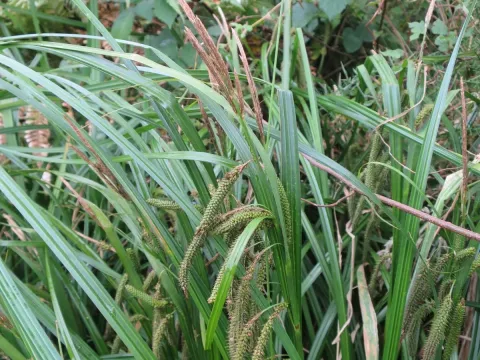
Carex geminata
Carex geminata
Carex geminata is a perennial herbaceous plant belonging to the Cyperaceae family. In its natural habitat, it reproduces primarily through seeds and vegetatively via a robust rhizome system, which allows it to form dense, expansive clumps.
What the section contains
Carex geminata
For cultivation, seeds should be sown in the spring once the soil temperature reaches 10–12 degrees Celsius. To achieve high germination rates, it is recommended to stratify the seeds for 30–45 days before planting.
When sowing, the seeds should be covered with no more than 1–2 centimeters of soil. Shallow sowing is often more effective, as the small seeds require adequate light exposure to trigger germination successfully.
Vegetative propagation by dividing established clumps is the preferred method for large-scale plantings and landscaping projects. This should be performed in early spring or late summer, ensuring each segment has healthy roots and shoots.
Planting density depends on the intended purpose. For phytoremediation or erosion control, a spacing of 30–40 centimeters is recommended to ensure rapid formation of a continuous sod cover.
As a true hydrophyte, this species has high moisture requirements. It thrives in waterlogged areas, wetlands, riparian zones, and locations with high water tables, making it an excellent choice for wet agricultural sites.
The plant prefers nutrient-rich organic, loamy, or peat soils with acidic to neutral pH levels. It is highly tolerant of periodic flooding, providing a significant biological advantage over many traditional forage or cover crops.
Carex geminata requires significant light exposure. While it can tolerate partial shade, the most vigorous growth and biomass production occur in full sun, where the soil warms up efficiently during the growing season.
The species is well-adapted to temperate climates and demonstrates excellent winter hardiness. It can withstand severe winter conditions without the need for additional protection, making it a reliable perennial plant.
Maintenance involves ensuring consistent moisture levels and managing competition during the plant's initial establishment phase. Once fully established, its aggressive root system naturally suppresses invasive weeds.
The primary agricultural and ecological use of Carex geminata is in the biological purification of wastewater. The plant actively absorbs excess nitrogen and phosphorus, playing a vital role in preventing eutrophication.
In farming, it can be utilized as a raw material for livestock bedding. Its dried biomass is durable and resistant to decomposition, making it a sustainable and cost-effective option for animal enclosures.
Emerging industrial uses include the production of cellulose and technical fibers. The high fiber content in its stems makes it a promising candidate for bio-based plastics and sustainable packaging materials.
Biomass yield depends on soil fertility and moisture availability. In nutrient-rich alluvial soils with constant hydration, the plant can produce between 8–12 tons of dry matter per hectare annually.
It also serves as a crucial component in the restoration of degraded wetlands, providing essential habitats and nesting grounds for waterfowl and contributing to the overall biodiversity of the local ecosystem.
Carex geminata typically possesses strong natural resistance. Possible issues include various forms of rust and leaf spots, which may emerge under conditions of extreme planting density and poor air circulation.
Pests rarely cause significant economic damage. Occasional outbreaks of aphids or specific caterpillar species feeding on tender young leaves during the peak spring growth phase are the most common concerns.
Disease management focuses on preventive measures, such as maintaining appropriate plant spacing to ensure airflow and removing dead vegetation at the end of the season to reduce fungal spore accumulation.
Quarantine and strict control over the movement of planting materials are essential to prevent the introduction of invasive insects or pathogens into healthy, established populations.
Chemical control is rarely utilized in wetland environments. If an infestation reaches critical levels, the application of biological fungicides is preferred to maintain the ecological integrity of the riparian zone.
Harvesting the above-ground biomass is typically performed at the end of the growing season when fiber content is at its peak and the natural moisture content of the stems is relatively low.
Mechanical mowers should be set to a cutting height of 10–15 centimeters above the soil level. This ensures the health of the rhizomes, allowing for rapid regeneration of the plant in the following season.
The harvested material must be thoroughly dried in the field or in controlled drying facilities, as sedge is naturally hygroscopic. Regular turning of the swathes is necessary to ensure even moisture loss.
Dried biomass is baled for easier transport and storage. It should be kept in well-ventilated, dry structures to prevent spoilage, molding, or potential fire risks associated with moisture accumulation.
When cultivated for conservation purposes, harvesting is usually conducted on a multi-year rotation to preserve the natural life cycle of the vegetation and protect local fauna breeding cycles.