
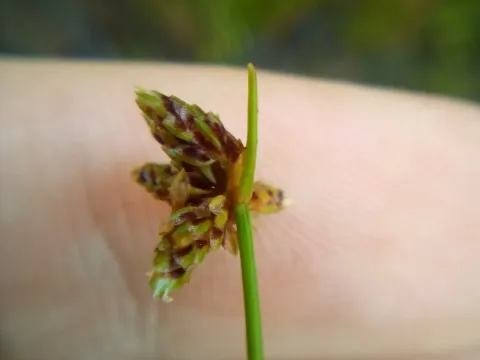
Swamp Club-rush
Isolepis inundata
Swamp Club-rush (Isolepis inundata) is a perennial herbaceous plant from the Cyperaceae family. It is native to wetlands in Australia, New Zealand, and parts of Asia, where it thrives in constant moisture and aquatic environments.
What the section contains
Swamp Club-rush
Botanically, this species forms dense, grass-like clumps with slender green stems. It is a moisture-loving plant adapted to shallow water, often serving as a key component in naturalistic water garden designs and wetland restoration projects.
For successful cultivation, the plant requires consistent moisture levels. It should be planted in shallow water or on saturated soil that never dries out. It prefers sunny to partially shaded locations, which encourages dense growth.
Soil requirements involve organic-rich media. A mixture of silt, clay, and decomposed organic matter provides the best nutrients for growth. The plant is highly efficient at extracting minerals directly from the water column in aquatic settings.
Agricultural techniques focus on climate management. Since it is not frost-hardy in temperate climates, containers should be moved to protected areas during winter to prevent root freezing. Proper spacing is essential to ensure adequate airflow between clumps.
The primary threats include fungal diseases caused by stagnant water or lack of proper water movement. If the water quality degrades, pathogens can quickly colonize the root system and lead to browning of the foliage.
Pests are generally not a major issue in outdoor pond conditions. However, aphids can occasionally infest the stems in greenhouse environments or during dry spells. Regular monitoring and water spraying can mitigate these risks.
Nutrient deficiency may occur if the plant is grown in sterile water, leading to pale foliage. Supplementing with specific aquatic plant fertilizers is recommended if the natural sediment does not provide enough minerals.
Weed competition is a silent threat in shallow water zones. Aggressive aquatic weeds can smother the clumps of Isolepis inundata, so manual removal of invasive species is necessary for healthy development.
- Maintaining water clarity
- Removing debris to prevent fungal growth
- Winter protection in cold climates