
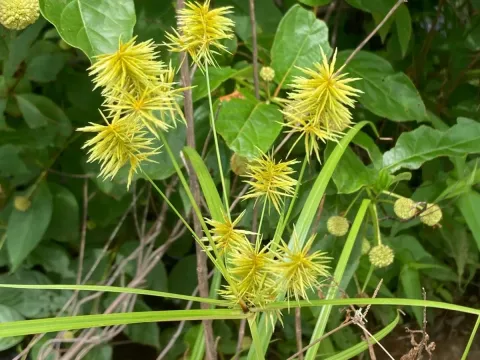
Straw-colored flatsedge
Cyperus strigosus
Straw-colored flatsedge (Cyperus strigosus) is a perennial member of the Cyperaceae family. While it possesses botanical interest, in an agricultural setting, it is primarily managed as a competitive weed that thrives in moist to wet soil conditions.
What the section contains
Straw-colored flatsedge
The plant is characterized by its rhizomatous growth pattern. Its ability to propagate via underground tubers makes it exceptionally difficult to eradicate, as tillage operations often fragment the rhizomes, leading to new growth.
Environmental requirements for Cyperus strigosus include high soil moisture levels. It is frequently found in irrigation ditches, wet meadows, and fields with poor drainage. It favors full sunlight and rapidly occupies areas where crop canopy closure is delayed.
In terms of soil, it prefers organic-rich, silty, or loamy textures where moisture retention is high. The species is highly resilient to transient flooding, which is why it often becomes a dominant species in rice paddies and flooded agricultural landscapes.
Agricultural management requires a multi-faceted approach. Improving field drainage is the primary cultural practice to reduce its competitive edge. Furthermore, the use of targeted herbicides applied during the early developmental stage is essential for effective suppression.
As a weed, Cyperus strigosus serves as an alternative host for various plant pathogens. These include rusts and other fungal diseases that can subsequently spread to economically important grain crops, impacting overall field health.
The dense root system of this sedge provides a stable environment for soil-borne pests. Various nematodes and insect larvae reside within the root zone, often causing secondary damage to the primary crops planted in the rotation.
Competitive pressure is the main threat to yield. By monopolizing water and nutrients, particularly nitrogen, Cyperus strigosus significantly inhibits the development of cash crops if the infestation density exceeds economic thresholds.
The plant's resilience to common cultivation practices means it can persist for years if not managed systematically. Continuous monitoring is required to prevent the seed bank and tuber population from reaching critical levels.
Integrated weed management (IWM) strategies are recommended, combining mechanical weed control, herbicide application, and competitive cropping techniques. Rotating crops to include dry-land species can also help diminish its dominance in the field.