
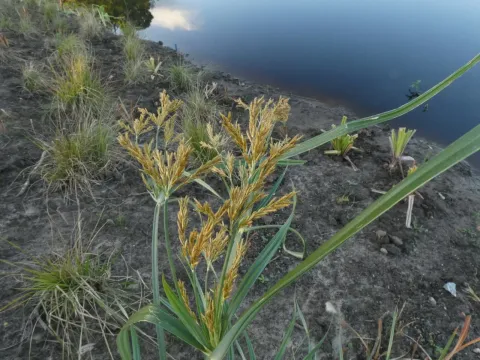
Umbrella sedge
Cyperus fastigiatus
Umbrella sedge (Cyperus fastigiatus) is a perennial plant species belonging to the Cyperaceae family. It is native to tropical and subtropical regions of Africa, where it predominantly grows in wetlands, marshes, and along riverbanks.
What the section contains
Umbrella sedge
Botanically, the plant is characterized by its rhizomatous root system and tall, rigid, triangular stems. These stems grow in dense clusters, which gives the plant its distinctive appearance and makes it highly productive in terms of biomass in suitable environments.
The cultivation of Cyperus fastigiatus requires specific hydrological conditions. It thrives in soils that are saturated or permanently damp. It is not suitable for cultivation on dry, well-drained soils, as the plant depends on consistent water availability for optimal metabolic activity.
Temperature is a critical factor for the development of this species. As a tropical plant, it requires warm climates, ideally maintaining temperatures above 20°C throughout the growing season to ensure rapid elongation of the stalks and efficient photosynthesis.
Industrially, the umbrella sedge is valued for its fibrous stems. These are harvested and used extensively in the production of traditional woven goods, mats, baskets, and other handicrafts. The durability of the dried stalks makes them a sustainable resource in local agrarian economies.