
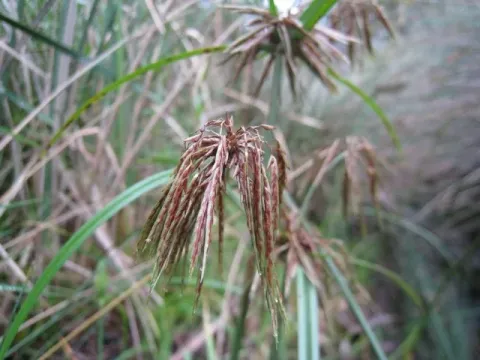
Fimbristylis miliacea
Cyperus miliacea
Fimbristylis miliacea, commonly known as globe fringerush, belongs to the Cyperaceae family. It is an annual or perennial sedge widely distributed throughout the tropical and subtropical regions of the world, primarily as a notorious weed in wetland agriculture.
What the section contains
Fimbristylis miliacea
The plant thrives in moist environments, particularly in rice paddies, irrigation canals, and marshy areas. Its ability to tolerate waterlogged soils makes it a dominant species in agroecosystems that involve shallow flooding as a standard cultivation practice.
Botanically, it features slender, tufted stems and a characteristic umbrella-like inflorescence. The plant produces a massive number of seeds, which ensures its rapid colonization of available niches in moist substrates once the environmental conditions become favorable.
Optimal growth occurs under high temperatures and consistent soil moisture. It is intolerant of dry conditions and typically dies back if the soil moisture drops significantly, making water management a key factor in controlling its growth cycles.
Agricultural management relies heavily on precise irrigation control and pre-emergence or post-emergence herbicide applications. Mechanical weeding is also practiced, although it is labor-intensive in flooded fields.
As a highly competitive weed, Fimbristylis miliacea significantly reduces the grain yield of rice by depleting soil nutrients and shading young crop seedlings.
The plant acts as an alternative host for various pests including the rice whorl maggot and other insects that feed on wetland vegetation.
High infestations create a humid microclimate at the canopy level, which favors the development of sheath blight and other rice-borne fungal pathogens.
Due to its resilience, the management of this species remains a challenge for farmers, requiring a sustained multi-year approach to exhaust the soil seed bank.
Integrated pest management (IPM) strategies, including crop rotation and the use of competitive crop varieties, are recommended to minimize the impact of this sedge.