
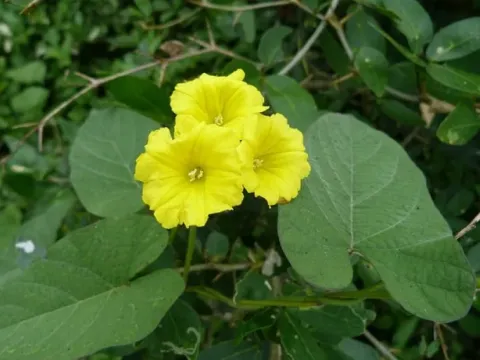
Ipomoea cymosa
Ipomoea cymosa
Sowing of Ipomoea cymosa is best performed during the spring season when soil temperatures remain stable between 20 and 25 degrees Celsius. In tropical climates, the onset of the rainy season provides the ideal environmental triggers for seed germination.
What the section contains
Ipomoea cymosa
Seeds of this species feature a robust coat, necessitating mechanical scarification or warm water soaking to facilitate uniform emergence. Seeds should be sown at a depth of 2 to 4 centimeters, depending on the physical properties and aeration of the soil.
Planting density is adjusted based on the intended yield; higher densities are utilized for biomass production, whereas wider spacing is required for high-quality seed multiplication. Proper spacing prevents excessive humidity between plants.
Seedlings typically emerge within 7 to 14 days following sowing. Initial development is characterized by rapid root establishment, followed by the activation of vining growth which requires monitoring to avoid competitive pressure from weeds.
Strategic timing ensures that the peak vegetative growth phase coincides with maximum solar irradiance, which is vital for the development of the structural integrity of the plant stems and leaves.
As a member of the Convolvulaceae family, Ipomoea cymosa is a warmth-demanding plant that thrives exclusively in frost-free regions. It is highly susceptible to chilling injury and cold temperatures, which can irreversibly damage its photosynthetic tissues.
The crop prefers well-drained, fertile soil, typically loamy or sandy-loam textures. Waterlogging is a significant threat to root health, often leading to susceptibility towards soil-borne pathogens and root rot in heavy clay soils.
Sunlight is a fundamental requirement for this species. It is considered a photophilous plant, needing full sun exposure to maintain high metabolic rates, promote vigorous vining, and ensure efficient nutrient uptake for biomass production.
Consistent moisture levels are critical, particularly during the early vegetative and mid-growth stages. While the plant exhibits moderate drought tolerance upon reaching maturity, irrigation is recommended to maintain peak production efficiency.
Nutrient management is essential, especially the availability of nitrogen during early growth stages to support leaf development. Potassium and phosphorus are recommended for late-stage maturity to strengthen the plant's overall vascular system.
Harvesting of vegetative biomass can be performed in multiple intervals throughout the growing season. Systematic pruning of the lateral vines encourages new growth and maximizes the total yield of leaf material per unit area.
Seed harvesting is conducted when the capsules become dry and brittle. It is crucial to perform this task before the capsules shatter naturally, which would result in significant yield loss due to seed dispersal on the field surface.
Post-harvest processing involves thorough cleaning of the seeds and drying in shaded, ventilated conditions. This ensures that the seed lots retain their maximum viability and germination potential for future planting seasons.
Industrial harvesting of the biomass is typically mechanized using specialized mowing equipment. The harvested material is then processed based on its final use, which may include animal fodder production or soil conditioning.
Removal of plant debris following the final harvest is an essential agronomic practice. Clearing the area reduces the habitat for potential pests and soil-borne diseases that could compromise the success of subsequent crop cycles.