
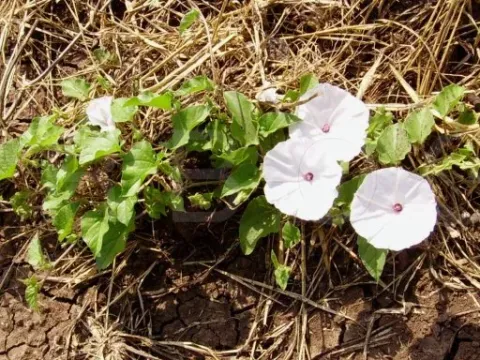
Ipomoea cordofana
Ipomoea cordofana
Sowing of Ipomoea cordofana should be initiated once the risk of frost has completely passed and soil temperatures have reached a stable warm level.
What the section contains
Ipomoea cordofana
The seeds possess a hard coat that often requires scarification to ensure uniform germination and to break physiological dormancy effectively.
Optimal planting depth is generally between 2 to 3 centimeters, depending on the soil texture and moisture content to prevent desiccation of the germinating embryo.
Spacings must be carefully planned to accommodate the plant's vigorous climbing habit, ensuring that air circulation is maintained throughout the canopy.
Controlled nursery propagation or direct field seeding in warm conditions allows for rapid establishment, with sprouts typically emerging within 7 to 10 days.
Belonging to the Convolvulaceae family, this species thrives in environments that replicate its native tropical or subtropical climate with high light intensity.
The crop prefers well-draining, loose soils that prevent waterlogging, as the roots are highly susceptible to rot if saturated for extended periods.
Regarding soil fertility, it responds well to moderate nutrient inputs but thrives even in nutrient-poor soils provided there is adequate moisture and sunshine.
This plant is strictly thermophilic; it requires significant heat accumulation to reach its full physiological potential and will show stress at temperatures below 15°C.
Exposure to full sunlight is essential for the vegetative development and subsequent flowering, as shading significantly inhibits growth and overall biomass production.
Common pests include aphids and spider mites, which can cause significant leaf damage and weaken the plant, especially during prolonged dry spells.
Fungal diseases, including powdery mildew, frequently manifest when humidity levels remain high and airflow between vines is restricted due to dense foliage.
Root rot pathogens become a threat if the field drainage is poor, leading to the rapid decline of the plant health and potential total crop failure.
Integrated pest management, including the use of selective insecticides and systemic fungicides, is recommended to mitigate risks during the critical growth phases.
Crop rotation and field sanitation are fundamental practices to reduce the carry-over of pathogens in the soil from one growing season to the next.