
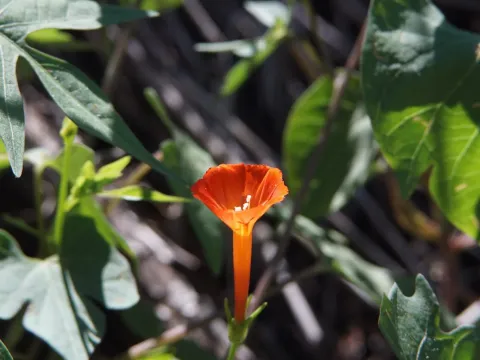
Ipomoea cristulata
Ipomoea cristulata
Ipomoea cristulata is a heat-loving annual crop that requires stable warm temperatures to germinate, making it essential to sow seeds only after the frost risk has passed.
What the section contains
Ipomoea cristulata
The ideal planting time is late spring, when the soil has warmed up to at least +15 to +18 degrees Celsius, ensuring favorable conditions for root development.
In regions with shorter growing seasons, starting seeds indoors in individual containers 3–4 weeks before the last expected frost is a recommended practice.
Soaking the seeds in warm water for 24 hours prior to sowing helps to soften the seed coat, which significantly improves the germination rate and plant vigor.
Seeds should be planted at a depth of 1–2 centimeters, covering them lightly with soil and keeping the surface moist until the seedlings emerge.
As a member of the Convolvulaceae family, Ipomoea cristulata thrives in sunny locations, as it requires full sun exposure to bloom abundantly and maintain its vine structure.
The soil should be well-draining, light, and moderately fertile; heavy or waterlogged soils are detrimental and can lead to root rot and poor plant development.
Proper water management is essential; the soil should be kept evenly moist, but never soggy, to support the rapid growth of the climbing vines during the season.
This species prefers warm climates, with optimal growth temperatures ranging from +20 to +25 degrees Celsius, allowing it to reach its full ornamental potential.
Providing a sturdy vertical support system, such as a trellis or fence, is a fundamental requirement to allow the vines to climb and flourish throughout the summer.
Spider mites are the most common pests affecting Ipomoea cristulata, particularly during hot and dry spells, which can cause foliage yellowing and reduced vigor.
Overwatering or poor drainage often leads to fungal root diseases, which cause the plant to wilt suddenly despite the presence of moisture in the surrounding soil.
Aphids can also be a challenge, as they colonize the soft, new growth and flower buds, sucking sap and potentially distorting the leaves of the climbing vines.
Maintaining good airflow around the plants and avoiding overhead irrigation can significantly reduce the risk of humidity-related fungal issues in the garden.
Early identification of pest infestations allows for the application of organic or biological controls, preserving the health of the plants without harsh chemicals.
Since Ipomoea cristulata is cultivated primarily as an ornamental plant, the harvest is restricted to the collection of mature seeds for future propagation.
Seeds are harvested when the seed capsules turn brown and begin to dry, indicating that the seeds inside are fully mature and viable for the next planting season.
Prompt collection is necessary because the capsules naturally split open upon reaching maturity, which could lead to unwanted self-seeding throughout the garden area.
Once collected, the seeds should be dried in a cool, shaded, and well-ventilated area before being stored in paper bags in a dry place at room temperature.
At the end of the season, all plant debris must be cleared from the soil after the first frost to maintain garden sanitation and prepare for the coming spring.