
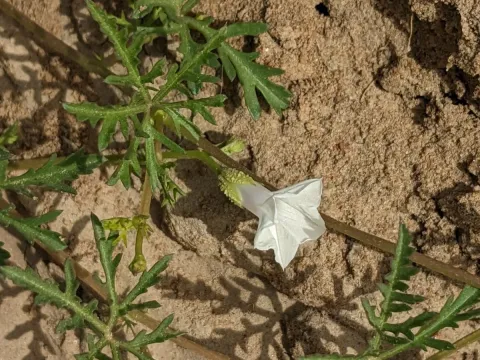
Ipomoea coptica
Ipomoea coptica
Ipomoea coptica is a herbaceous plant belonging to the family Convolvulaceae. This species is easily distinguished from other ipomoea varieties by its deeply palmately divided leaves, which give the vine an elegant and distinct appearance throughout the growing season.
What the section contains
Ipomoea coptica
Originating from the tropical regions of Africa and parts of India and the Arabian Peninsula, this plant is well-adapted to warm climates. It thrives in well-drained, nutrient-rich soils and requires a full sun location to maximize its growth and flowering potential.
The climate requirements include high average temperatures, ideally between 22°C and 30°C. While the plant can tolerate short dry spells, consistent soil moisture is essential for vigorous foliage development. It is highly sensitive to frost, necessitating a long frost-free growing period.
Agricultural practices for this crop involve the installation of trellises or supports. Being a climbing vine, it requires vertical space to ensure proper air circulation and to prevent the lower parts of the plant from becoming susceptible to fungal infections due to lack of ventilation.
In terms of utilization, Ipomoea coptica is primarily recognized for its pharmacological properties. It has a history of traditional use in treating various inflammatory conditions and dermatological issues, making it a niche but valuable crop for botanical medicine production.
Common threats to Ipomoea coptica include fungal diseases such as powdery mildew, which often occur in high humidity or stagnant air conditions. Proper spacing between rows is critical to ensure that leaves dry quickly after rainfall or irrigation.
Pests like spider mites and aphids are frequently observed, particularly in dry environments. They cause damage by feeding on the sap of young leaves, which can lead to stunted growth and discolored foliage if left unmanaged by integrated pest control methods.
Root-knot nematodes pose a significant risk, particularly in sandy soils where these organisms thrive. Implementing crop rotation techniques and using composted organic amendments can help suppress nematode populations and improve soil health for the plant.
Waterlogging is a major danger, as it leads to root rot and other soil-borne diseases. Ensuring that the site has adequate drainage is a fundamental requirement for preventing losses caused by water-related stress and subsequent pathogen infiltration.
Regular inspection of the vine is necessary to identify early signs of stress or infestation. By maintaining a clean environment and applying preventative measures like mulching, growers can effectively protect the crop and ensure a healthy harvest for processing.