
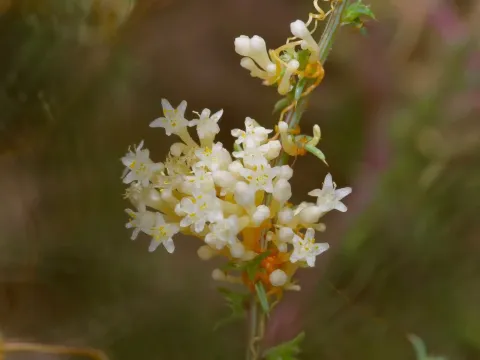
Umbrella dodder
Cuscuta umbellata
Umbrella dodder (Cuscuta umbellata) is an obligate parasitic plant belonging to the Convolvulaceae family. Lacking chlorophyll and true roots, it relies entirely on its host plant to obtain nutrients and water through specialized organs known as haustoria.
What the section contains
Umbrella dodder
Originally native to North and Central America, this species has spread through the movement of contaminated agricultural seeds. It is considered a significant quarantine threat in many regions due to its aggressive growth patterns and difficulty in eradication.
The plant thrives in warm, humid conditions. Germination occurs when environmental temperatures reach optimal levels, and the seedling must establish a connection with a host plant quickly, as its initial energy reserves are extremely limited.
Agricultural management requires rigorous inspection of seed lots and field monitoring. Since dodder seeds are often similar in size and shape to commercial crop seeds, mechanical cleaning techniques must be precise and highly efficient.
Cultivation of non-host crops in affected areas is a primary agronomic strategy to break the life cycle of the parasite, as the species requires specific biochemical signals from its hosts to anchor successfully.
Umbrella dodder significantly reduces crop yields by siphoning off carbohydrates and proteins. This nutritional drain leads to stunted growth, reduced fruit production, and overall weakening of the host plant's physiological condition.
Beyond direct competition, it acts as a highly efficient vector for plant viruses and phytoplasmas. By bridging host plants, it facilitates the rapid transmission of systemic diseases across agricultural plots.
The infestation complicates harvest logistics, as the twining stems can clog agricultural machinery, leading to downtime and increased maintenance costs for farmers and producers.
One of the most concerning features is the seed bank longevity. Dodder seeds can remain viable in the soil for several years, ensuring the infestation returns whenever a susceptible host is planted in the vicinity.
Integrated pest management (IPM) is essential. While chemical control is an option, its effectiveness is often limited by the intimate physical connection between the dodder and the crop, making prevention the most cost-effective approach.