
Thunberg bindweed
Convolvulus thunbergii
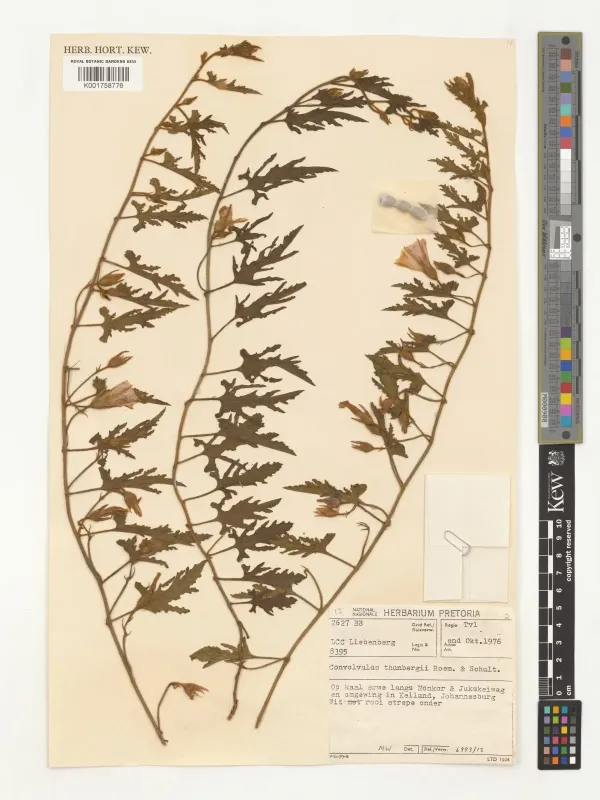
Description
Sowing dates
Sowing of Thunberg bindweed seeds is performed in the spring once the soil has warmed sufficiently to ensure rapid germination.
Direct field sowing is typically scheduled for late May to avoid the dangers of late spring frosts which can damage delicate seedlings.
Seeds should be planted at a shallow depth of approximately 1 to 2 centimeters to provide optimal conditions for emergence.
For those aiming for early blooms, a greenhouse-based seedling method can be used, starting seeds 4 to 6 weeks before transplanting.
Spacing between plants must be carefully managed, ensuring a gap of at least 40–50 cm to allow for vigorous vine expansion.
Growing requirements
This species thrives in full sun exposure, requiring maximum light to maintain healthy foliage and continuous flower production.
The ideal soil profile for this plant includes well-drained, sandy or loamy textures that allow root systems to breathe effectively.
Water management is critical, as the crop requires consistent moisture but is highly susceptible to root rot caused by waterlogging.
Support structures are mandatory for this climbing vine, as vertical growth is a natural characteristic of its biological development.
Soil pH should remain in the neutral or slightly acidic range to optimize the availability of essential nutrients for the plant.
Yield
The primary agricultural use of Thunberg bindweed is in vertical landscaping and the decoration of garden fences or trellises.
The plant demonstrates significant vegetative growth, allowing it to cover large surface areas within a single growing season.
Optimal biomass production is achieved through balanced fertilization, focusing on phosphorus and potassium to support blooming.
Flowering duration is a key measure of the crop's success, providing aesthetic value throughout the summer and early autumn months.
Seed harvesting should occur once the capsules dry out, ensuring that the seeds are fully mature before collection for propagation.
Main diseases and pests
Fungal pathogens such as powdery mildew represent the most significant threat to the crop, especially in humid and poorly ventilated conditions.
Aphids frequently target new shoots and flower buds, causing sap depletion and potentially stunting the growth of the vine.
Spider mites can become a major issue during dry spells, leading to foliage discoloration and a decline in overall plant vigor.
Cultural control methods include ensuring proper plant spacing and keeping the area free of weeds that may host various pests.
Integrated pest management, including the use of targeted biological agents, is recommended to keep the plant healthy and productive.