
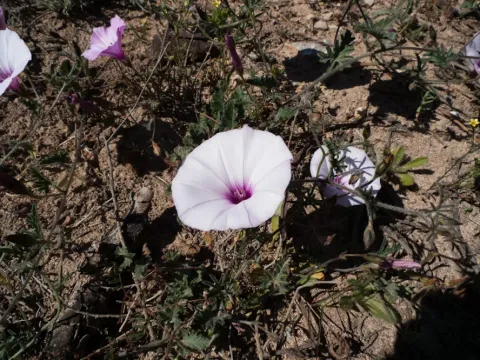
Valencian bindweed
Convolvulus valentinus
Valencian bindweed (Convolvulus valentinus) is a perennial herbaceous plant belonging to the Convolvulaceae family. It is native to the Mediterranean basin, where it thrives in rocky soils and arid environments, demonstrating remarkable adaptation to harsh conditions.
What the section contains
Valencian bindweed
The plant features a compact growth habit with trailing or semi-erect stems. Its botanical structure is designed to minimize transpiration, allowing it to survive in regions with very limited annual rainfall and high intensity of sunlight.
Regarding climate, this species requires full sun exposure to flourish. It is highly sensitive to shade, which can inhibit flower bud formation and cause the stems to become weak, leggy, and prone to mechanical damage.
Soil requirements focus primarily on drainage. The species prefers alkaline or neutral, well-draining soils. It is particularly well-suited for rock gardens and slopes where water does not accumulate near the root collar.
Agrotechnical practices should prioritize infrequent irrigation. Once established, the plant becomes highly drought-tolerant, requiring supplemental water only during prolonged periods of extreme summer heat or drought.
Powdery mildew is the most frequent fungal issue, often triggered by high humidity or poor air circulation around the canopy. Ensuring sufficient space between individual plants can significantly mitigate this risk.
Spider mites are the most prominent pests, especially during dry seasons. They feed on leaf sap, which results in characteristic stippling, discoloration, and a decline in the overall vigor of the bindweed.
Root rot, caused by various oomycetes, is the primary threat to plant survival in poorly drained or waterlogged soils. To prevent this, planting in elevated beds or sloping sites is highly recommended.
Aphids can occasionally colonize succulent growth points during the spring. While they rarely cause death, they can stunt development and facilitate the growth of sooty mold due to honeydew secretion.
Integrated pest management is recommended for this species. This includes monitoring for early signs of infection, maintaining clean cultivation areas, and using selective pesticides only when pest populations exceed economic thresholds.