
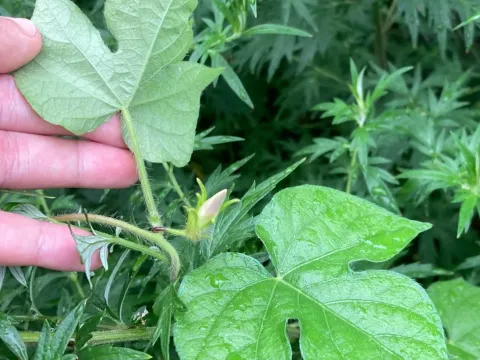
Woolly morning glory
Ipomoea barbigera
Sowing Ipomoea barbigera should be conducted in late spring once the soil temperature consistently reaches 15 degrees Celsius for optimal germination.
What the section contains
Woolly morning glory
The seeds possess a hard seed coat, making scarification or a 24-hour soaking period essential to ensure uniform emergence in the field.
Seed depth should be maintained between 1 to 2 centimeters; placing seeds too deep can significantly delay or prevent the emergence of seedlings.
For regions with a short growing season, starting the plants indoors in individual cells is recommended to gain a head start on vegetative growth.
Adequate spacing, generally 30 to 45 centimeters apart, is crucial to prevent competition for nutrients and light among the growing vines.
As a member of the Convolvulaceae family, Ipomoea barbigera thrives in full sun, requiring at least six hours of direct sunlight daily for best performance.
The species prefers well-draining, moderately fertile soil, though it is known to be adaptable to various soil types if drainage is adequate.
Consistent moisture is required during the active growth phase, but the soil should be allowed to slightly dry out between watering sessions.
Temperatures ranging from 20 to 28 degrees Celsius are ideal for robust plant health and maximum flower production throughout the season.
Vertical structures such as trellises or netting are necessary for these climbing plants to reach their full potential and ensure proper air circulation.
Spider mites are a common pest for this crop, especially during prolonged dry spells when humidity is low and temperatures are elevated.
Aphids often target new, succulent growth, which can lead to stunted development and the transmission of viral pathogens if left unchecked.
Powdery mildew represents a significant fungal threat, usually triggered by poor air movement and high relative humidity around the plant canopy.
Root rot caused by overwatering is a critical concern, highlighting the importance of choosing a planting site with excellent drainage properties.
Regular monitoring of the foliage and implementing early intervention strategies are key to maintaining the overall vitality of the stand.