
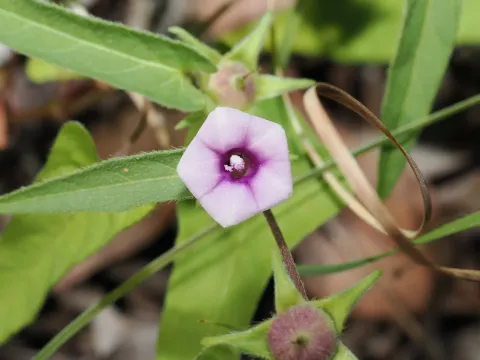
Woolly morning glory
Ipomoea eriocarpa
Sowing of Ipomoea eriocarpa is typically performed at the onset of the warm season when soil temperatures are consistently high enough to support rapid germination.
What the section contains
Woolly morning glory
Seeds should be placed at a depth of 2 to 3 centimeters. Proper soil-to-seed contact is essential to ensure that moisture is transferred effectively for embryo development.
In field production, row planting is the preferred method, allowing for efficient management of the plant's aggressive growth habit and easier maintenance of the crop canopy.
High germination rates are observed when soil moisture is maintained at an optimal level during the first week following the sowing process, especially in well-prepared seedbeds.
Care must be taken to space rows appropriately, as the vine-like growth characteristic of this species can lead to overcrowding if the planting density is too high.
Ipomoea eriocarpa is a highly light-demanding crop. It thrives in full sun exposure, which is necessary to maximize photosynthetic output and ensure healthy biomass production.
While adaptable to various soil types, the plant achieves the best yields on fertile, well-draining loamy soils that prevent waterlogging in the root zone.
The crop requires a steady water supply during its active growth phases. Although somewhat drought-tolerant, consistent irrigation is key to maintaining high foliage quality.
Temperatures ranging from 22 to 30 degrees Celsius are considered ideal for the plant's metabolism. Growth slows significantly if temperatures drop below 15 degrees.
Nutrient management focuses on ensuring adequate nitrogen levels during the early stages of vegetative development to support the rapid formation of stems and leaves.
The plant is susceptible to common sap-sucking insects, such as aphids and whiteflies, which can weaken the plant by feeding on the nutrient-rich sap of the younger shoots.
Fungal pathogens represent a major threat, particularly in high-humidity environments. Leaf spot diseases are frequently observed if air circulation around the plants is poor.
Root-knot nematodes can become a significant issue in fields where this crop is grown repeatedly, necessitating the use of crop rotation cycles to break the pest cycle.
Viral infections can cause chlorosis or leaf distortion. These are often introduced by insect vectors, highlighting the need for efficient pest control measures.
Effective mitigation of these threats involves a combination of preventive field sanitation, the use of resistant varieties where available, and integrated pest management.
Harvesting of Ipomoea eriocarpa depends on the specific agricultural or experimental objective, whether it is for biomass production or seed collection.
If harvested for vegetative biomass, the cutting should be timed before the onset of senescence to ensure the highest quality of the plant material.
For seed production, harvesting takes place once the seed pods have reached maturity and show signs of drying, preventing premature shattering in the field.
Manual harvesting is common in smaller operations, while mechanized harvesting requires careful calibration of equipment to handle the trailing nature of the plants.
Post-harvest handling requires rapid drying of the plant parts to prevent mold formation, which can quickly degrade the quality of the harvested produce.