
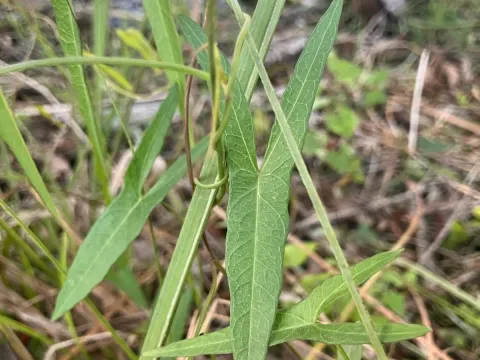
Arrowleaf morning glory
Ipomoea sagittata
Arrowleaf morning glory (Ipomoea sagittata) is a perennial vine belonging to the Convolvulaceae family. Native to the Americas, this species is well-known for its natural ability to thrive in coastal environments and saline soil conditions.
What the section contains
Arrowleaf morning glory
The plant requires full sun exposure to reach its maximum growth potential. Sandy or well-draining soil types are preferred, as these mimic its natural habitat and prevent the roots from rotting due to waterlogging, which is a critical factor in successful cultivation.
Temperature management is vital, as this plant is highly sensitive to frost. It flourishes in tropical and subtropical climates where temperatures remain consistently warm throughout the vegetative season, supporting continuous vine development.
Agricultural practices include the installation of trellises or supports, as the plant is a vigorous climber. Fertilization should be balanced, focusing on nitrogen during the early stages and potassium to encourage robust flowering throughout the summer months.
The morphology of the plant is defined by its distinct arrow-shaped leaves and showy, funnel-shaped flowers. It is an excellent candidate for stabilizing sandy soils, although management is required to prevent it from becoming overly invasive in specific environments.
Common threats to Ipomoea sagittata include spider mites, which are particularly active during hot and dry spells. These pests damage the foliage, leading to reduced photosynthetic capacity and overall weakening of the plant's structural integrity.
Fungal diseases, specifically powdery mildew, often occur when there is poor air circulation around the vines. Maintaining proper spacing between plants is an essential strategy to reduce humidity and inhibit the growth of these pathogens.
Aphids can also infest the tender shoots, causing leaves to curl and stunt growth. Integrated pest management, including the use of beneficial insects or mild organic soaps, is often recommended for early detection and control.
Root rot remains a concern if the soil does not provide adequate drainage. It is crucial to monitor irrigation schedules to ensure that the moisture levels remain stable but not excessive, especially during periods of low light or cooler temperatures.
To maintain plant health, consistent monitoring is recommended. If symptoms of viral infections appear, such as leaf discoloration or mosaic patterns, the affected plants must be removed and destroyed immediately to prevent the spread of the virus.