
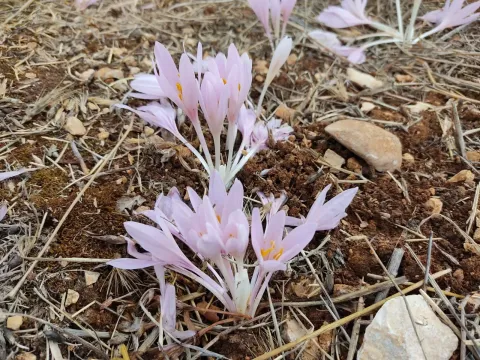
Jerusalem colchicum
Colchicum hierosolymitanum
Jerusalem colchicum (Colchicum hierosolymitanum) is a bulbous perennial belonging to the Colchicaceae family. Native to the Eastern Mediterranean region, specifically regions including Israel and Jordan, it is a hardy plant well-adapted to areas with dry summers and cool, wet winters.
What the section contains
Jerusalem colchicum
The plant exhibits a distinct seasonal rhythm, producing flowers in the autumn without leaves, while the foliage develops in the spring and subsequently withers as the summer heat sets in. This cycle determines the specific maintenance requirements for the crop.
For successful cultivation, it is essential to provide a location with full sunlight. Exposure to direct sunlight is crucial during the flowering period and for the development of spring leaves, which ensure the accumulation of energy for the next year.
Well-drained soil is the primary prerequisite for Colchicum hierosolymitanum. If the soil is heavy or prone to waterlogging, it is necessary to integrate mineral amendments such as sand or fine gravel to prevent bulb rot.
The ideal soil reaction is neutral to slightly alkaline. During the growth cycle, the plant does not require heavy fertilization, as its storage organs are capable of maintaining its physiological functions if the soil is sufficiently aerated and loose.
Fungal infections, such as grey mold (Botrytis) and Fusarium wilt, are the most significant threats to the crop. These pathogens usually emerge under conditions of excess moisture or poor soil structure.
Mollusks, including snails and slugs, are particularly destructive to the fresh foliage during the spring growing phase. Controlling their population is vital for the health of the bulb.
Bulb mites can damage the underground tissues, especially if the bulbs are bruised during planting or if the soil remains excessively damp throughout the dormant phase.
Proper field hygiene is essential; removing decaying plant matter after the spring season helps minimize the risk of pathogen overwintering near the bulbs.
Due to the presence of colchicine, all parts of the plant are highly toxic. Handlers must exercise extreme caution, and the plant should be kept away from areas where pets or small children are active.