
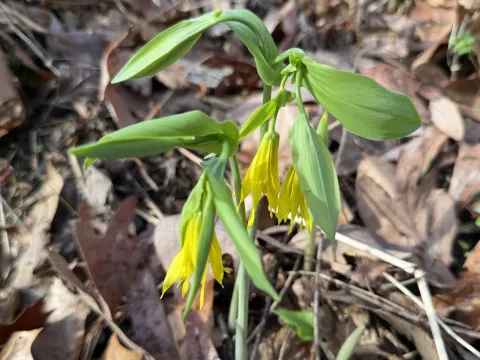
Large-flowered bellwort
Uvularia grandiflora
Uvularia grandiflora, commonly known as large-flowered bellwort, belongs to the Colchicaceae family. In a cultivation setting, it is primarily propagated through the division of rhizomes, which is the most reliable method for maintaining variety characteristics.
What the section contains
Large-flowered bellwort
The ideal time for division and replanting is in early autumn as the plant enters dormancy. This timing allows the root system to settle into the soil before the ground freezes.
Seed propagation is possible but demanding; seeds require a cold stratification period to break dormancy. Sowing should be done in late autumn to mimic natural winter conditions.
When selecting a planting site, incorporate plenty of organic matter like leaf mold or compost. The soil structure must be loose and crumbly, mirroring the humus-rich forest floor where this species originates.
Spacing is essential for the plant's long-term health. Allow at least 30 to 45 centimeters between plants to accommodate the gradual expansion of the rhizomatous root clump over several years.
Native to the woodlands of North America, this plant is perfectly adapted to shaded environments. Success in agriculture depends heavily on mimicking its natural light and moisture conditions.
Large-flowered bellwort demands deep shade or partial shade. Direct midday sunlight should be strictly avoided as it can cause foliar scorch and irreversible damage to the plant's delicate stems.
Soil pH should ideally be neutral to slightly acidic. The soil must be moist but well-draining; any tendency towards waterlogging will lead to rapid decay of the rhizomes, especially during winter.
Consistent moisture is key throughout the spring growing season. If rainfall is insufficient, supplemental irrigation is necessary to prevent premature yellowing of the leaves and ensure next year's blooms.
The plant is highly hardy and generally survives extreme cold without intervention. Adding a layer of loose mulch in late autumn can help retain soil moisture and regulate temperature fluctuations.
Slugs and snails are the most prominent pests for Uvularia grandiflora. They are particularly attracted to the tender emerging shoots in the spring and can cause significant cosmetic damage.
Fungal root diseases are the primary pathological threat, typically triggered by soil compaction or poor drainage. These conditions cause roots to suffocate and eventually rot.
Poor air circulation between plants can lead to the development of powdery mildew. This is rarely fatal but degrades the visual appearance of the foliage, requiring attention to spacing.
Aphids may occasionally appear on the undersides of the leaves. While usually manageable, monitoring during periods of rapid growth is recommended to prevent infestation spread.
Maintaining a clean, weed-free environment around the base of the plant is vital. Weeds compete for nutrients and keep the humidity too high at the base, which invites opportunistic fungi.