
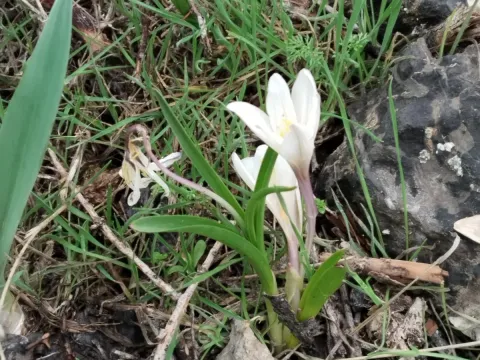
Kesselring's Meadow Saffron
Colchicum kesselringii
Kesselring's Meadow Saffron (Colchicum kesselringii) is a perennial bulbous plant belonging to the Colchicaceae family. It is a highly specialized species primarily valued for its early spring ornamental bloom, making it a unique addition to alpine gardens and rockeries.
What the section contains
Kesselring's Meadow Saffron
The native range of this plant includes the mountainous regions of Central Asia, specifically the Pamir-Alai and Tian Shan ranges. This origin indicates that the species is adapted to thrive in harsh, rocky environments with distinct seasonality and dramatic temperature fluctuations.
Botanically, it forms small, tunicated corms that remain dormant for a significant part of the year. The leaves are typically narrow and channeled, appearing early in the season, while the flowers are distinctively shaped with white petals often marked by purple stripes on their reverse.
Success in cultivating this species depends on providing a well-drained, gritty soil substrate. Since the plant originates from mountain slopes, it requires excellent soil aeration and is intolerant of heavy, waterlogged clays that can lead to corm rot during the dormant summer phase.
Agrotechnically, this plant benefits from a sunny location that allows for optimal photosynthesis during its short growth cycle. Careful management of site conditions, such as mimicking scree slopes, encourages the plant to naturalize and produce offsets consistently over several years.
Fungal pathogens such as Sclerotinia and various forms of soft rot are the most common threats to the health of the corms. Prevention is primarily achieved through moisture control and ensuring the soil remains dry and warm during the post-flowering summer senescence period.
Small mammals, particularly voles, represent a significant threat as they may consume the corms during winter dormancy. Additionally, mollusks such as slugs can damage early spring foliage, necessitating the use of perimeter barriers or targeted protective measures during the rapid growth phase.