
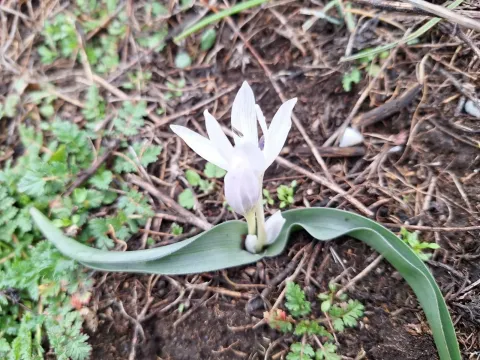
Hungarian meadow saffron
Colchicum hungaricum
Hungarian meadow saffron (Colchicum hungaricum) is a perennial bulbous plant belonging to the Colchicaceae family. Native to the limestone slopes of Hungary and the Balkan region, this species has adapted to arid and rocky environments where drainage is naturally excellent.
What the section contains
Hungarian meadow saffron
The plant exhibits a unique phenology characterized by a short growth period. Its foliage typically emerges in early spring, reaches maturity rapidly, and completely senesces by mid-summer, allowing the plant to survive hot and dry summers in a state of deep dormancy within its underground bulb.
Cultivation requires sites with full solar exposure and exceptionally well-draining soil. Because of its native alpine origins, the plant does not tolerate waterlogged conditions, which can cause the bulb to rot quickly. Sandy or stony soils with a slightly alkaline pH are considered ideal for optimal growth.
In agricultural practice, the maintenance of Colchicum hungaricum involves minimal interference. It is recommended to plant bulbs in groups to create a naturalistic appearance in rock gardens or sunny borders. During the active growing season, light watering is acceptable, but it must be strictly avoided during the summer dormancy phase.
While primarily cultivated for ornamental purposes in specialized gardens, the species is also valued in botanical research. The presence of colchicine in its tissues makes it an object of study, and gardeners often propagate it by dividing clumps every 3 to 4 years to prevent overcrowding and maintain bulb vigor.
The plant is susceptible to fungal pathogens like Botrytis and various root rots, typically triggered by poor drainage or excessive humidity during the spring. Good soil management and ensuring sufficient air circulation around the plants are the best preventative measures against these diseases.
Pests such as slugs and snails are the primary concern, as they feed on the succulent spring foliage. Bulb mites and onion flies can also cause indirect damage to the bulb structure. Control strategies include baiting for gastropods and ensuring bulbs are healthy and undamaged at the time of planting.