
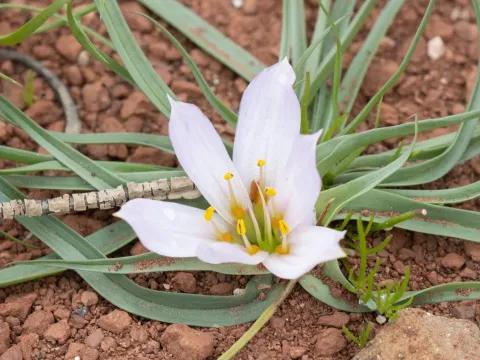
Colchicum gramineum
Colchicum gramineum
Colchicum gramineum is typically propagated either by seeds or by the division of mature corms during the plant's dormant phase.
What the section contains
Colchicum gramineum
Seeds should be sown shortly after they are harvested in mid-summer, as they require a period of cold stratification to germinate properly in the spring.
Vegetative propagation involves lifting and dividing the corm clusters when the foliage has completely died back and the plant is in a state of rest.
When planting corms, they should be placed at a depth of 10 to 15 centimeters to ensure they remain protected from soil surface temperature fluctuations.
Gardeners should note that seed-grown plants are slow to reach maturity and may require several years of vegetative growth before producing their first flowers.
This species thrives in sunny, open locations, as it is highly sensitive to shade and will fail to bloom if kept in dark or overcrowded garden areas.
The ideal soil for Colchicum gramineum is a well-drained, fertile loam that prevents moisture from accumulating around the corms during their summer dormancy.
While the plant is quite hardy, it requires consistent moisture during the spring months to support the rapid development of its grass-like leaves.
It is crucial to maintain good air circulation around the plants to prevent the buildup of humidity, which can lead to fungal infections in the soil.
Minimal disturbance is recommended, as the plant establishes deep roots and performs best when left undisturbed for several consecutive seasons.
Gray mold (Botrytis) and various types of bulb rot are the primary threats to this plant, especially when soil drainage is insufficient or weather is unusually wet.
Pests such as slugs and snails are particularly problematic during the early spring growth phase, as they target the succulent new foliage and buds.
Wireworms and other subterranean larvae can damage the corms directly, which often leads to systemic weakness or secondary bacterial infections.
Effective management includes maintaining a clean garden environment and using appropriate insect or fungal control measures when early signs of damage appear.
Gardeners should avoid overcrowding the plants, as this practice creates a microclimate that promotes the spread of pathogens between individual specimens.