
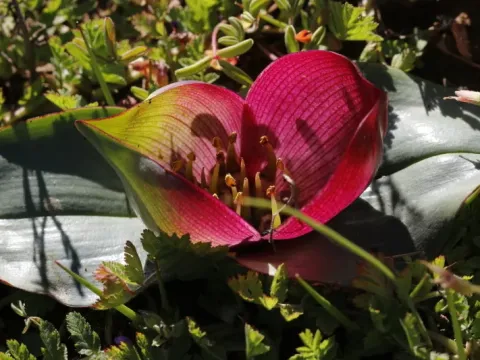
Colchicum burchellii
Colchicum burchellii
Planting of Colchicum burchellii is best performed in late summer, specifically from late August to early September. This timing coincides with the plant's natural dormancy period before the start of the growth cycle.
What the section contains
Colchicum burchellii
Corms should be placed at a depth of 10–15 centimeters, depending on the bulb size and the soil type. Correct planting depth ensures protection against temperature fluctuations and helps the root system establish effectively.
Spacing should be maintained at 15–20 centimeters between individual corms. This density allows for proper air circulation, which is vital for preventing rot diseases in the dense foliage of the plant.
Propagation is mostly achieved through the division of mature clumps after the foliage has died back. This method ensures the new plants maintain the genetic characteristics of the parent bulb.
Ensuring the corms are planted in a well-prepared bed allows the plant to develop a strong root system during the autumn months, which supports healthy flower production.
Colchicum burchellii belongs to the Colchicaceae family. It originates from the arid regions of Southern Africa, which defines its specific requirements for a dry summer rest period and moist cool winters.
Excellent soil drainage is the most critical factor for success. The corms are highly susceptible to rot if they sit in waterlogged soil, especially during periods of inactivity or high precipitation.
The ideal soil is a light, fertile, and sandy loam with a neutral to slightly alkaline pH. If the existing soil is heavy clay, it must be amended with grit or perlite to improve drainage and aeration.
The plant thrives in full sun, which is necessary for the development of robust stems and long-lasting flowers. While it can handle light shade, flowering performance is significantly better in exposed, sunny areas.
The climate requirements mimic Mediterranean-type conditions, where winter rains trigger growth, followed by a hot, dry summer that allows the corms to ripen and prepare for the next season.
Slugs and snails represent the primary pests for Colchicum burchellii. They can cause severe damage to the emerging foliage in spring, which in turn reduces the bulb's energy reserves for the following season.
Fungal pathogens such as Fusarium and gray mold are common threats, especially when drainage is insufficient. These pathogens invade the basal plate of the corm, often leading to rapid decline.
Viral infections can cause stunted growth or distorted flower petals. Since there is no cure for such viruses, identifying and discarding affected plants is the standard protocol for disease control.
Excessive use of nitrogen-rich fertilizers can make the plant tissues soft and susceptible to pests. A balanced, low-nitrogen approach is recommended for long-term health.
Regular monitoring of the site for signs of rot or pest damage is necessary, particularly during the transition from the wet winter season to the warmer spring growth phase.