
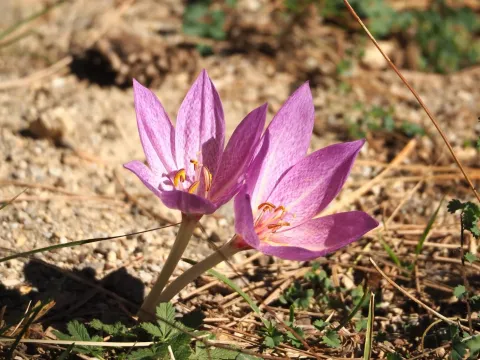
Colchicum bivonae
Colchicum bivonae
Colchicum bivonae is a perennial herb belonging to the Colchicaceae family. It is recognized for its unique biological cycle where the foliage develops in the spring, while the flowering process occurs exclusively in the autumn, often after the leaves have withered.
What the section contains
Colchicum bivonae
The species is native to the Mediterranean basin, with its primary natural habitat spanning across Italy, Sicily, and the Balkans. It thrives in open, sunny locations where it can receive the necessary warmth during the summer dormancy period required for proper bulb maturation.
Cultivation success depends heavily on soil conditions; the plant requires well-draining, nutrient-rich soil with a neutral to slightly alkaline pH. Heavy, waterlogged clays should be avoided, as they promote rot and impede the healthy development of the corm.
Botanically, the plant is characterized by large, funnel-shaped flowers that frequently exhibit a distinct tessellated or checkered pattern on the petals. This ornamental trait makes it a highly desirable species for specialized rock gardens and landscape installations.
Beyond aesthetics, Colchicum bivonae holds significant interest in pharmacology. Like other members of its genus, it contains high concentrations of colchicine, an alkaloid used in medical research and the treatment of specific inflammatory conditions, emphasizing its dual value.
The most significant threats to Colchicum bivonae include fungal pathogens such as botrytis and various bulb rots, which are predominantly triggered by poor drainage and excessive moisture during the summer dormancy period.
Pest pressure primarily comes from gastropods, specifically slugs and snails, which can cause severe damage to emerging flower buds in early autumn. In some instances, subterranean pests like wireworms may also compromise the structural integrity of the corms if left unmonitored.