
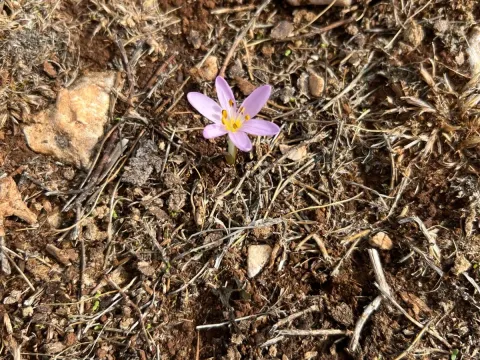
Colchicum cupanii
Colchicum cupanii
The planting of Colchicum cupanii corms is best performed in late summer, during the dormant phase. The optimal timing falls between late August and early September, ensuring the root system can establish itself before the soil temperature drops significantly.
What the section contains
Colchicum cupanii
Corms should be planted at a depth of approximately 10 to 15 centimeters, depending on their size. It is crucial to maintain adequate spacing between the corms to ensure proper airflow, which significantly reduces the risk of fungal proliferation in the root zone.
While propagation through seeds is biologically possible, it is rarely used in commercial or home cultivation due to the long juvenile stage. Plants grown from seeds usually require at least 5 to 7 years to reach the blooming stage for the first time.
The site selection should prioritize locations that receive full sun in early spring to support leaf growth, transitioning to partial shade during the summer. Protecting the plants from strong, desiccating winds is also highly recommended for long-term health.
After planting, it is advisable to apply a layer of mulch, such as organic compost or leaf mold. This practice not only protects the corms from thermal fluctuations but also helps to suppress weed germination in the immediate vicinity of the plants.
Colchicum cupanii belongs to the Colchicaceae family and thrives in well-draining, fertile soils with a neutral or slightly alkaline pH. In heavy clay soils, incorporating coarse sand or grit is essential to prevent moisture accumulation and promote healthy corm development.
The plant is highly sensitive to waterlogged conditions, particularly during the summer dormant season. Poor drainage is the most common cause of corm rot, making raised beds or slopes the preferred locations for planting in areas with high annual rainfall.
Botanically, this species is adapted to Mediterranean climates with mild, wet winters and dry summers. In regions with harsh, freezing winters, covering the planting site with a protective layer is necessary to prevent deep freezing of the soil and potential frost damage.
Light requirements fluctuate throughout the year. Spring growth requires maximum sunlight to facilitate nutrient accumulation in the corms, while summer dormancy allows for tolerance of shaded conditions beneath trees, as long as the soil remains relatively dry.
Fertilization should be applied strategically, primarily in early spring when the leaves emerge. A balanced fertilizer high in potassium is recommended, as potassium plays a vital role in increasing the plant's natural resistance to diseases and harsh climatic conditions.
Fungal diseases, specifically gray mold (Botrytis) and Fusarium rot, represent the primary threat to Colchicum cupanii. Preventive measures include ensuring proper soil drainage and using fungicide treatments for corms before they are planted in the ground.
Slugs and snails are major pests that target the foliage during the wet spring months. Implementing physical barriers, such as copper tape or crushed eggshells, or using environmentally friendly bait, is an effective strategy to minimize leaf damage.
The larvae of the narcissus bulb fly can occasionally infest the corms, leading to decay and poor growth. Removing and destroying affected corms is the standard management practice, as chemical control options are limited once the infestation is established inside the tissue.
Small rodents, such as field mice, may dig up and eat the dormant corms, especially during winter months when other food sources are scarce. Planting inside protective wire baskets provides a reliable physical barrier against these mammalian pests.
It is critical to note that all parts of the Colchicum cupanii plant are poisonous due to the presence of colchicine. Professional handling requires the use of gloves, and the plants should be kept away from areas accessible to pets and small children.