
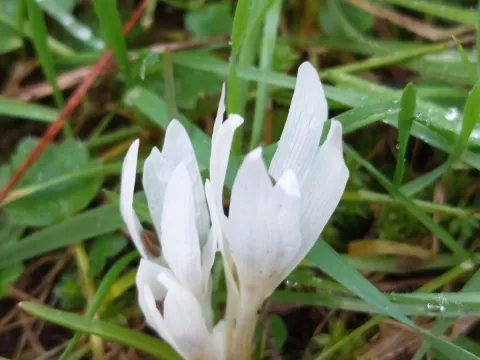
Colchicum atticum
Colchicum atticum
Planting of Colchicum atticum corms is typically performed in late summer or early autumn. This timing aligns with the plant's natural dormant phase, allowing for successful root establishment before the winter season begins.
What the section contains
Colchicum atticum
The corms should be planted at a depth of approximately 10–15 centimeters. Ensuring proper burial depth is essential for protecting the plant from temperature fluctuations and maintaining optimal soil moisture levels throughout the development cycle.
A spacing of 15–20 centimeters between individual corms is recommended to ensure sufficient aeration and nutrient availability. Proper distancing is crucial to prevent the spread of soil-borne pathogens and to promote healthy leaf development.
After planting, it is necessary to water the soil thoroughly to ensure good contact between the corm and the soil medium. This practice prevents air pockets that could otherwise hinder root growth and lead to premature desiccation.
Vegetative propagation via daughter corms is the most reliable method for expanding plantings. This process is ideally carried out every few years during the dormant period to ensure the health and vigor of the bulb stock.
Colchicum atticum thrives in sunny locations with well-drained, fertile soil. Exposure to full sun is critical for the plant to reach its full flowering potential and to store sufficient energy for the subsequent year's growth.
The soil structure must be porous, as these plants are highly sensitive to waterlogging. Incorporating sand or fine gravel into heavier soil compositions can significantly improve drainage and oxygen diffusion to the roots.
While the plant exhibits remarkable drought tolerance, moderate irrigation during the spring growth phase is beneficial. Providing adequate moisture during the foliage expansion stage directly impacts the plant's overall vitality.
A neutral to slightly alkaline pH level is ideal for this species. Regularly testing the soil and adjusting as necessary will support the plant's nutrient uptake and long-term health in the garden landscape.
In colder regions, applying a layer of organic mulch can provide essential insulation against frost. This practice is especially important for protecting young sprouts that may emerge during unseasonably mild winter spells.
Fungal diseases, particularly rot affecting the corm tissue, represent the most significant threat to Colchicum atticum. These issues are almost exclusively linked to poor drainage and excessive moisture accumulation.
Gastropod pests such as slugs and snails are known to feed on the foliage during the spring season. Implementing physical barriers or organic bait can help mitigate damage to the leaves without harming the surrounding environment.
Botrytis or gray mold can occur if the foliage is subjected to prolonged high humidity and poor ventilation. Keeping the growing area tidy and removing decayed organic matter is an effective preventative measure.
Small mammals and rodents may occasionally disturb corms, causing mechanical injury or consumption. Utilizing wire mesh cages during the planting process offers robust protection against these subterranean pests.
Gardeners should handle the plant with caution, as it contains toxic alkaloids. Always wear gloves when working with corms to avoid skin irritation and to prevent accidental ingestion of plant tissues.