
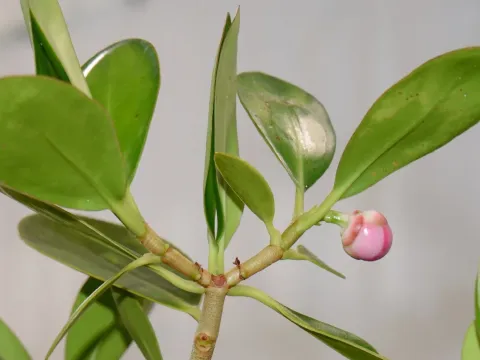
Clusia odorata
Clusia odorata
Clusia odorata is a remarkable species belonging to the Clusiaceae family. Known for its distinct leathery foliage and fragrant blooms, this plant is native to tropical regions where it typically thrives as an epiphyte or a hemiepiphyte, demonstrating significant adaptability to various forest canopy environments.
What the section contains
Clusia odorata
Regarding climate conditions, the culture requires a warm environment with high ambient humidity. Temperatures should remain within the range of 20°C to 28°C to ensure steady growth. Sudden temperature drops or cold drafts are detrimental and can lead to leaf drop and stunted development of the plant.
Soil requirements for this plant are centered on excellent drainage and aeration. A substrate mixture rich in organic matter, such as peat, bark, and perlite, is highly recommended to prevent waterlogging. The root system is sensitive to anaerobic conditions, making the choice of potting medium or soil texture a critical factor.
Light exposure needs to be carefully managed; while the plant enjoys bright, indirect light, direct tropical sunlight can cause severe scorching of the leaves. In indoor or controlled environments, providing a consistent light source is necessary for maintaining the structural integrity of the plant's thick foliage.
Agricultural management includes regular, controlled irrigation and moderate fertilization. During the growing season, a balanced liquid fertilizer is essential to maintain vigorous leaf production. It is important to avoid over-fertilization, as high salt accumulation can quickly damage the delicate root hairs.
The primary threats to Clusia odorata include sap-sucking insects, such as scale insects and mealybugs. These pests frequently colonize the stems and the undersides of leaves, draining vital nutrients and causing the foliage to lose its natural luster and develop yellow spots.
Fungal pathogens and root rot represent significant threats to the crop when drainage systems are inadequate. These diseases are often opportunistic, attacking the root system when the soil remains saturated for extended periods, leading to rapid deterioration of the plant's base and vascular system.
Integrated pest management (IPM) is the most effective approach for maintaining healthy plants. This involves physical removal of isolated pests, regular cleaning of the foliage, and the judicious use of pesticides only when infestation levels exceed the economic threshold for the plant's health.
Environmental stress can often weaken the plant's natural defenses, making it more susceptible to infections. Ensuring proper air circulation around the canopy helps reduce humidity levels around the foliage, which is a key factor in preventing the spread of various fungal and bacterial pathogens.
Early diagnosis is vital for the survival of the culture. Growers should monitor for symptoms such as wilting despite moist soil, stunted growth, or visible pests. Implementing sanitation practices, such as disinfecting tools and isolating new plants, significantly reduces the likelihood of widespread disease outbreaks.