
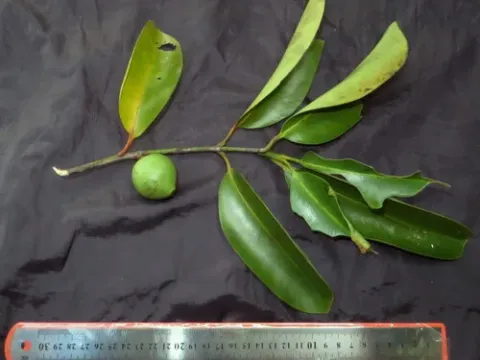
Garcinia bancana
Garcinia bancana
Garcinia bancana belongs to the Clusiaceae family, a group of plants known for their tropical distribution and valuable bioactive compounds. This evergreen species is native to the dense, humid rainforests of Southeast Asia, specifically documented in regions across Indonesia, Malaysia, and the Bangka islands.
What the section contains
Garcinia bancana
The cultivation of this plant is strictly limited to tropical zones characterized by high temperatures and consistent humidity levels. It requires an environment where temperatures remain between 24 and 30 degrees Celsius year-round, as the species lacks tolerance for frost or cool temperate shifts.
Success in growing this species depends on providing well-drained, nutrient-rich soils. The plant thrives in loamy or sandy substrates that can maintain moisture without causing waterlogging, which is a critical threat to the health of its root system in heavy or compacted soil types.
Botanically, Garcinia bancana exhibits a slow growth rate, a common characteristic within the genus. It requires a canopy-like environment, especially in its juvenile stage, to prevent leaf scorch and ensure healthy development, often benefiting from the shelter of larger neighboring trees.
The economic utility of the plant primarily lies in its fruits, which contribute to local diets within its native range. Furthermore, its biological profile makes it a subject of interest in botanical studies regarding the pharmacological potential of the Garcinia genus, reflecting the species' multifaceted value.