
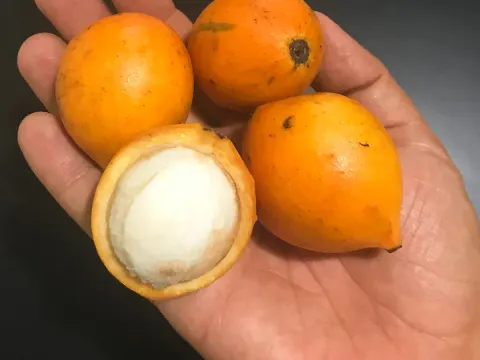
Brazilian Garcinia
Garcinia brasiliensis
Brazilian Garcinia (Garcinia brasiliensis), commonly known as bakupuri, belongs to the Clusiaceae family. This evergreen tree is native to the tropical rainforests of South America, specifically Brazil, where it thrives in humid and warm environments.
What the section contains
Brazilian Garcinia
Climate requirements for this culture are strict: it demands tropical temperatures ranging from 22 to 30 degrees Celsius. The plant is extremely sensitive to frost and cold winds, which can lead to significant biomass loss or even death of young specimens.
The ideal soil for Garcinia brasiliensis is deep, well-draining, and rich in organic matter. While the tree can adapt to various soil textures, it performs best in neutral to slightly acidic soils with sufficient aeration to support deep root development.
Botanically, the plant is characterized by its dense canopy and leathery, opposite leaves that prevent excessive transpiration. The tree usually has a slow to moderate growth rate, making early-stage care critical for establishing a strong, healthy framework for future fruit production.
Economic importance lies primarily in its edible fruit, which is highly appreciated for its sweet and tangy pulp. Additionally, the plant is valued for its potential use in traditional medicine and the extraction of specialty plant oils, making it a valuable crop for agroforestry projects.
The primary threats to Brazilian Garcinia are fungal leaf spots and mildew, which often develop during periods of prolonged high humidity. Improving air circulation within the tree canopy through selective pruning is a necessary practice to mitigate these risks.
Pest pressure is mainly exerted by scale insects and mealybugs, which sap the vitality of the plant by feeding on the sap of young stems and leaves. Early identification of these pests is essential to prevent them from spreading to the entire plantation.
Root rot is a critical threat that stems from poor soil drainage or excessive irrigation. Once the root system is compromised, the tree loses its ability to absorb nutrients, leading to rapid yellowing of the foliage and eventual decline.
Management of these threats involves the use of high-quality organic fertilizers to boost tree immunity and targeted biological control agents. Avoiding chemical pesticide overuse helps maintain the beneficial microfauna that naturally regulates pest populations.
Regular inspections of the canopy, especially after rainfall, are crucial for long-term health. Maintaining a clean cultivation area free from debris reduces the incidence of soil-borne pathogens and supports robust fruit development throughout the season.